
Sighthound ALPR+
License Plate Recognition
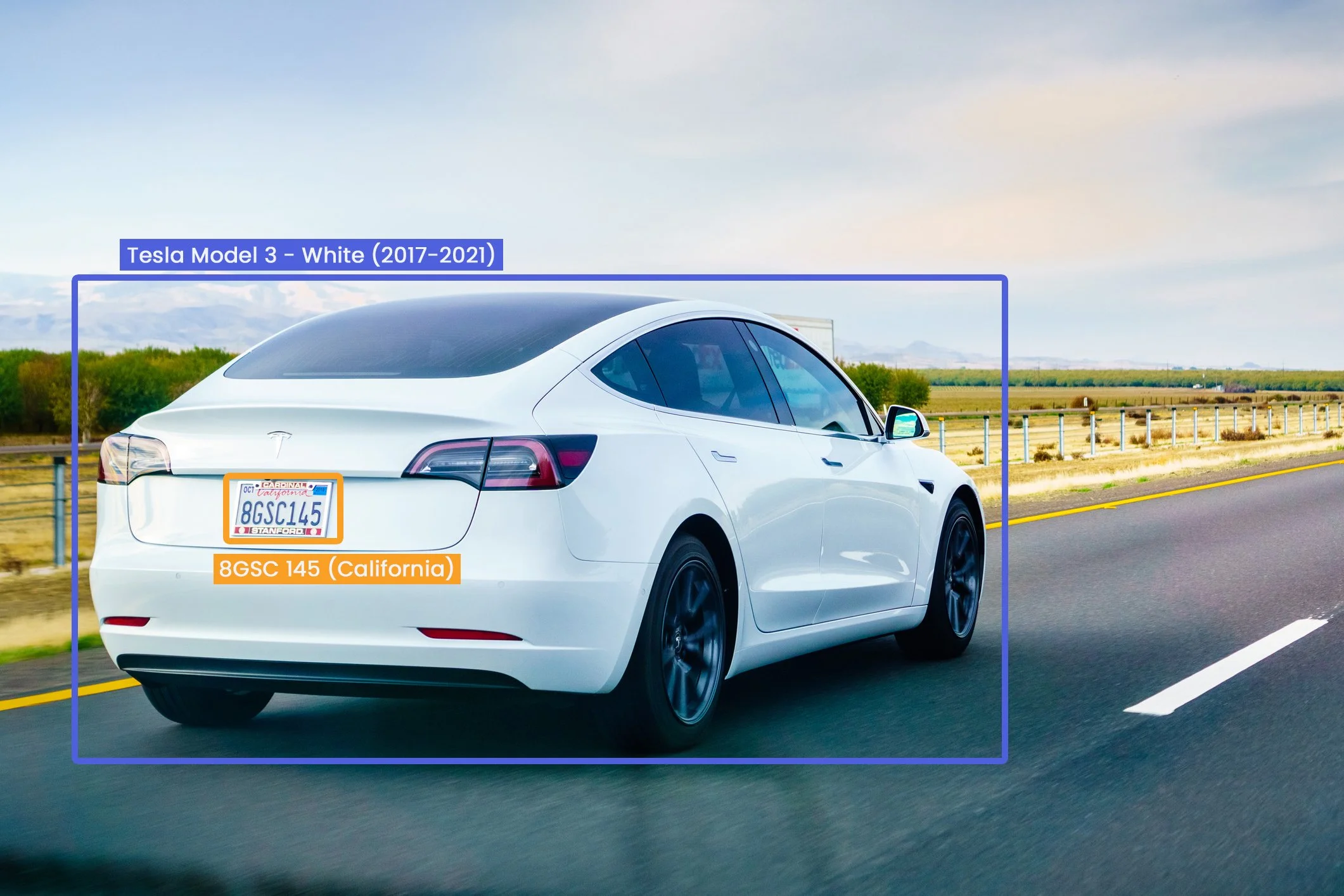
Fact: Official REST examples show ALPR+ detecting license plates and returning plate characters, region, coordinates, and confidence scores in JSON.
AI-Powered Video, Audio & Image Redaction Solutions - Market Analysis for Sales & Marketing
AI-Powered ALPR & Vehicle Analytics - Market Analysis for Sales & Marketing
Sighthound Redactor v7.1.3 (released May 5, 2026) is a hybrid desktop/server AI-powered redaction solution positioned for enterprise deployment, with the latest release adding out-of-disk-space protection, memory diagnostics, persisted redaction-history controls, server stability improvements, operational logging, and targeted bug fixes. The competitive landscape includes 14 primary competitors ranging from specialized video tools to comprehensive multi-format solutions.
Primary market. Bodycam footage, FOIA compliance, chain of custody.
Growing segment. Discovery, deposition, evidence handling.
FOIA/GDPR compliance, classified material handling, multi-office deployment.
HIPAA compliance, PHI redaction, research footage anonymization.
Emerging segment. Border security, aerial footage anonymization, and UAV-based evidence redaction.
"Smart Fill" is now available as a dedicated redaction mode in the export UI, providing visually more pleasing redaction compared to fixed color filling.
Redactor supports standalone audio redaction, allowing users to mute, bleep, or remove speech and sensitive information in audio files (without needing video) like MP3, WAV, and AAC.
Redactor can now detect these new classes: Documents in general; IDs, e.g. driver licenses or passports; Screens (laptops, monitors, phones). These classes are also selectable via the API.
It is now possible to import H.265 (aka HEVC) video files into Redactor. Rendering will still happen i the H.264 format (highest compatibility for video playback)
Support for such actions via the common [Ctrl]+[Z] (undo) and [Ctrl]+[Y] keyboard input. This covers all areas of editing (boxes, audio regions, grouping).
Two features were added to make background (aka as reverse) redaction possible: an object can be marked a _As background_, and an object can be marked with the _Keep unredacted_ flag.
For 1+ videos (when not being opened) audit logs can be requested via the context menu. It will yield a ZIP file containing pairs (for each video) of two files.
For the latest updates, feature announcements, and deprecation notices, see the official Redactor Release Notes. The version selector below is populated from the attached dev.sighthound.com release-notes markdown saved at /data/docs-redactor-com-release-notes.md.
Role: Processes 50-500 videos/month for FOIA/discovery
Pain Points: Manual redaction takes 4-8 hours per video; overwhelming backlog
Needs: One-click automation, batch processing, reliable results
Buying Influence: Recommends to supervisor; budget authority limited
Success Metric: Reduction in redaction time from days to hours
Their Daily Frustrations: Repetitive manual work, incomplete auto-detection, and deadline pressure from records requests
Their Key Motivations: Faster case handling, lower backlog, and more confidence in release-ready evidence
Common Objections: Will it miss faces, can I still manually control output, and how long will training take?
The "Magic Words" (Talk Track): AI-assisted control, batch-ready workflow, faster FOIA turnaround, and human review built in
Role: Ensures FOIA/GDPR compliance across multiple departments
Pain Points: Inconsistent redaction standards; compliance risk; manual oversight
Needs: Auditable process, consistent results, multi-office support
Buying Influence: High—department decision-maker
Success Metric: Zero redaction failures; 100% audit trail
Their Daily Frustrations: Audit prep, exception handling, and chasing process consistency across teams
Their Key Motivations: Lower legal exposure, policy compliance, and repeatable redaction standards
Common Objections: How do we validate consistency, does it support our compliance controls, and can it scale across departments?
The "Magic Words" (Talk Track): Full audit trail, standardized redaction, compliance-ready deployment, and secure governance
Role: Manages discovery redaction for high-stakes cases
Pain Points: Tight FOIA deadlines; accidental disclosure liability
Needs: Fast turnaround, defensible process, professional support
Buying Influence: High—owns budget for legal tech
Success Metric: On-time delivery; zero litigation risk
Their Daily Frustrations: Late-stage review cycles, manual QC, and pressure to reduce disclosure risk
Their Key Motivations: Defensible workflows, faster production, and reduced review burden
Common Objections: Can this support our timeline, is the process defensible, and what happens if detection misses something?
The "Magic Words" (Talk Track): Litigation-ready output, defensible AI workflow, rapid turnaround, and review-friendly controls
Role: Ensures HIPAA compliance in research/operations
Pain Points: Manual redaction is error-prone; audit risk; cost overruns
Needs: HIPAA-certified tool, audit logs, on-premise support
Buying Influence: High—owns compliance budget
Success Metric: Zero PHI exposures; full compliance documentation
Their Daily Frustrations: Preparing evidence of controls, reviewing exceptions, and avoiding PHI leakage in sensitive media
Their Key Motivations: Passing audits, reducing breach risk, and keeping sensitive data in approved environments
Common Objections: Where does data live, how is compliance documented, and can this fit our internal approval model?
The "Magic Words" (Talk Track): On-premise control, compliance documentation, audit-ready logs, and protected PHI workflows
Role: Approves software for deployment across organization
Pain Points: Cloud security concerns; vendor lock-in; integration complexity
Needs: On-premise option, API support, SSO, security certifications
Buying Influence: High—technical gatekeeper
Success Metric: Seamless integration; zero security incidents
Their Daily Frustrations: Security reviews, conflicting deployment requirements, and integration gaps
Their Key Motivations: Reduced risk, architectural fit, and long-term operational stability
Common Objections: Will it fit our environment, does it support identity controls, and what happens in offline deployments?
The "Magic Words" (Talk Track): Hybrid deployment, API-first, offline capable, and enterprise security controls
Role: Final approval on software spend
Pain Points: Per-minute/per-file pricing models are unpredictable
Needs: Transparent pricing, ROI calculation, cost savings proof
Buying Influence: Highest—controls budget
Success Metric: 50%+ savings vs. manual redaction or competitor
Their Daily Frustrations: Budget variance, opaque vendor pricing, and difficulty forecasting usage-based costs
Their Key Motivations: Predictable spend, measurable ROI, and productivity gains without headcount growth
Common Objections: Is the fixed cost justified, what is the payback period, and how does it compare to manual labor?
The "Magic Words" (Talk Track): Transparent annual pricing, unlimited processing, lower total cost, and faster ROI
Pricing: Custom pricing | Deployment: Cloud/On-Premise
Sighthound Wins On: Established market presence, broader feature set, transparent pricing
Pricing: Custom pricing | Deployment: Cloud
Sighthound Wins On: Deployment flexibility, clearer pricing model
Pricing: Not publicly available — contact vendor | Deployment: Cloud / On-Premise (Custom)
Sighthound Wins On: Purpose-built redaction suite, transparent fixed annual pricing, stronger compliance positioning
Pricing: Custom pricing | Deployment: Cloud/On-Premise
Sighthound Wins On: Broader use case coverage, stronger law enforcement positioning
Pricing: Custom pricing | Deployment: On-Premise/Cloud
Sighthound Wins On: Market presence, feature depth, enterprise support
Pricing: Custom pricing | Deployment: Cloud SaaS
Sighthound Wins On: Video specialization, deployment options, multi-format support
Pricing: Custom pricing | Deployment: On-Premise
Sighthound Wins On: Video expertise, broader format support, AI capabilities
Pricing: Custom pricing | Deployment: Cloud
Sighthound Wins On: Video/audio specialization, hybrid deployment, multi-format
Pricing: Custom pricing (enterprise) | Deployment: Cloud SaaS
Sighthound Wins On: Specialized video redaction, deployment flexibility, law enforcement focus
Pricing: Custom pricing | Deployment: Enterprise SaaS
Sighthound Wins On: Specialized redaction tool, cost-effectiveness, direct software deployment
Pricing: $2,400-$250K+/year | Deployment: Azure GovCloud (Cloud-only)
Sighthound Wins On: Cost (50-60% less), deployment flexibility, offline support, ID/document detection
Pricing: $279-$379/month | Deployment: Windows Desktop/On-Premise
Sighthound Wins On: Video specialization, server deployment, REST API, newer AI capabilities
Pricing: $19/minute + $1 (no subscriptions) | Deployment: Cloud (AWS)
Sighthound Wins On: Cost at scale (unlimited vs. $19/min), batch processing, broader feature set
Pricing: $164-$329/month | Deployment: Windows Desktop
Sighthound Wins On: Deployment flexibility, multi-format support, batch processing, multi-user teams
Pricing: Custom pricing | Deployment: Cloud/On-Premise Hybrid
Sighthound Wins On: Transparent pricing, government/law-enforcement fit, offline support, and broader compliance-led messaging
Pricing: Usage-based API pricing | Deployment: Cloud API
Sighthound Wins On: End-to-end visual redaction, multi-format workflow, predictable annual pricing, and offline or on-premise deployment
Pricing: Custom pricing | Deployment: Cloud SaaS
Sighthound Wins On: Hybrid deployment, deeper law-enforcement and government use cases, and stronger feature breadth across evidence workflows
| Feature | Sighthound | Veritone | CaseGuard | FastRedaction | MotionDSP | CLIPr | AssemblyAI | Lantero | Pimloc | VIDIZMO | PIXEL FORENSICS | Facit | Suspect | Redactable | Extract | iDox | Everlaw | TransPerfect |
|---|---|---|---|---|---|---|---|---|---|---|---|---|---|---|---|---|---|---|
▶Object Categories(click to expand) Faces & Heads | IDs & Passports | Vehicles | License Plates | Documents & Screens | Audio Segments | ✓ Full Suite | ✓ Multi-Object | ✓ Full Suite | ⚠ Faces + Plates | ⚠ Faces + Plates | ⚠ Limited Suite | ✗ Audio Only | ⚠ Limited Suite | ⚠ Partial Suite | ⚠ Faces Only | ⚠ Limited Suite | ✓ Multi-Object | ⚠ Faces Only | ⚠ Limited Suite | ⚠ Docs Only | ⚠ Limited Suite | ⚠ Docs + Faces | ⚠ Limited Suite |
| Audio Redaction | ✓ Full | ✓ Full | ✓ Full | ⚠ Limited | ✓ Full | ⚠ Partial | ✓ Strong | ⚠ Partial | ⚠ Partial | ⚠ Partial | ⚠ Limited | ⚠ Limited | ⚠ Limited | ⚠ Limited | ✗ No | ⚠ Limited | ⚠ Limited | ⚠ Limited |
| Batch Processing | ✓ Yes | ✓ Yes | ✓ Yes | ✓ Yes | ⚠ Limited | ✓ Yes | ✗ No | ⚠ Limited | ⚠ Limited | ⚠ Limited | ⚠ Limited | ⚠ Limited | ⚠ Limited | ✓ Yes | ✗ No | ⚠ Limited | ⚠ Limited | ✗ No |
| Data Processing Location (On-Premise / Cloud / Hybrid) | ✅ On-Premise / Cloud / Hybrid / Air-Gapped | ☁️ Cloud Only (AWS GovCloud) | 🖥️ On-Premise Only | ☁️ Cloud Only (AWS) | 🖥️ On-Premise (Windows Desktop) | ☁️ / 🖥️ Cloud / Partial Hybrid | ☁️ Cloud API Only | ☁️ Cloud SaaS | ☁️ / 🖥️ Cloud / On-Premise (Limited) | ☁️ Cloud Only | Cloud / On-Premise (Custom) | ⚠️ Cloud / On-Premise ⓘ | ⚠️ On-Premise / Cloud ⓘ | ☁️ Cloud SaaS | 🖥️ On-Premise | ☁️ Cloud | ☁️ Cloud SaaS | ☁️ Enterprise SaaS |
| Undo/Redo (v7.0.3) | ✓ Full | ✓ Yes | ✓ Full | ✗ No | ⚠ Limited | ⚠ Limited | ✗ No | ⚠ Limited | ⚠ Limited | ✗ No | ✗ Not publicly available | ⚠ Limited | ⚠ Limited | ⚠ Limited | ✗ No | ✗ No | ✗ No | ✗ No |
Pricing data below uses only official company websites, Capterra product listings, and G2 product listings. Where no verified Capterra or G2 product listing was found for the specific competitor, that field is marked as not publicly listed instead of linking to unrelated products.
Select a competitor to view pricing details.
Competitor Name: Sighthound Redactor
— Plan Name / Tier: Free, Pro, Enterprise, Custom
— Price: Free $0; Pro $2,500/year; Enterprise starting at $3,500/year; Custom pricing
— Billing Model: 24-hour hosted trial / Annual subscription / Custom
— Free Trial / Free Plan: Yes; 24-hour hosted free trial, no credit card required, up to 2 minutes
— Source URL: https://www.redactor.com/pricing
— Starting Price (as listed): Not publicly listed
— Pricing Model Shown: Not publicly listed
Capterra Direct Link: No verified Capterra product listing found
— Starting Price (as listed): Not publicly listed
— Pricing Model Shown: Not publicly listed
G2 Direct Link: No verified G2 pricing listing found
Notes: Official Sighthound product page routes pricing to Redactor.com, where public plans are listed for hosted trial, desktop Pro, server Enterprise, and custom API/team deployments. Pro desktop licenses are purchased one at a time; multi-user, server, cloud, and API deployments route to sales or quote flows.
Competitor Name: Veritone Redact
— Plan Name / Tier: Veritone Redact platform and managed redaction service
— Price: Custom Quote / Not publicly listed
— Billing Model: Custom
— Free Trial / Free Plan: Not publicly listed
— Source URL: https://www.veritone.com/applications/redact/
— Starting Price (as listed): Not publicly listed
— Pricing Model Shown: Not publicly listed
Capterra Direct Link: https://www.capterra.com/p/184450/Veritone-Redact/
— Starting Price (as listed): Not publicly listed
— Pricing Model Shown: Not publicly listed
G2 Direct Link: No verified G2 pricing listing found
Notes: Video redaction product. Official site routes prospects to sales/contact flow; no public dollar pricing was listed on the allowed sources.
Competitor Name: CaseGuard Studio
— Plan Name / Tier: Doc Suite, Media Suite, Ultimate Suite, Enterprise
— Price: Not publicly listed
— Billing Model: Subscription / Custom
— Free Trial / Free Plan: Not publicly listed
— Source URL: https://caseguard.com/redaction-pricing/
— Starting Price (as listed): Not publicly listed
— Pricing Model Shown: Not publicly listed
Capterra Direct Link: https://www.capterra.com/p/10030197/CaseGuard/
— Starting Price (as listed): Not publicly listed
— Pricing Model Shown: Not publicly listed
G2 Direct Link: https://www.g2.com/products/caseguard-studio/pricing
Notes: Multi-format redaction suite covering documents, images, audio, and video. Official pricing page lists plan names, feature comparisons, and Enterprise availability for 20+ seats, but no public dollar amounts were visible in the verified page content.
Competitor Name: FastRedaction
— Plan Name / Tier: Free Trial, Pay As You Go, Team / Annual Custom Plans
— Price: Free Trial $0; Pay As You Go $19 + $1 per minute of uploaded video; annual and team plans by contact
— Billing Model: One-time / Per usage
— Free Trial / Free Plan: Yes
— Source URL: https://www.fastredaction.com/
— Starting Price (as listed): Not publicly listed
— Pricing Model Shown: Not publicly listed
Capterra Direct Link: No verified Capterra product listing found
— Starting Price (as listed): Not publicly listed
— Pricing Model Shown: Not publicly listed
G2 Direct Link: No verified G2 pricing listing found
Notes: Video redaction tool. Pay-as-you-go pricing is transparent, but total cost scales with uploaded video minutes.
Competitor Name: MotionDSP Spotlight
— Plan Name / Tier: Spotlight, Forensic, Forensic Studio
— Price: Spotlight $164/month per license or $1,870/year per license; Forensic $274/month or $3,124/year; Forensic Studio $329/month or $3,751/year
— Billing Model: Monthly / Annual / Per seat
— Free Trial / Free Plan: No; free 30-minute demo listed
— Source URL: https://motiondsp.com/collections/all
— Starting Price (as listed): Not publicly listed
— Pricing Model Shown: Not publicly listed
Capterra Direct Link: No verified Capterra product listing found
— Starting Price (as listed): Not publicly listed
— Pricing Model Shown: Not publicly listed
G2 Direct Link: No verified G2 pricing listing found
Notes: Video enhancement and forensic redaction workflow. ⚠️ Spotlight Pro pricing is ambiguous because public product pricing showed $204 USD while the FAQ directs users to contact MotionDSP for Pro pricing.
Competitor Name: CLIPr
— Plan Name / Tier: Free, Annual, Team / Dept, Enterprise, Need More
— Price: Free $0; Annual $997.50/year or $91.44/month; Team / Dept $9,500/year or $915/month; Enterprise $34,000/year or $3,116.67/month; Need More custom
— Billing Model: Monthly / Annual / Custom
— Free Trial / Free Plan: Freemium
— Source URL: https://www.clipr.ai/clipr-pricing
— Starting Price (as listed): Not publicly listed
— Pricing Model Shown: Not publicly listed
Capterra Direct Link: No verified Capterra product listing found
— Starting Price (as listed): Not publicly listed
— Pricing Model Shown: Not publicly listed
G2 Direct Link: No verified G2 pricing listing found
Notes: Video intelligence and indexing platform rather than a dedicated redaction tool. Free tier is limited to 1 user and 5 annual hours.
Competitor Name: AssemblyAI
— Plan Name / Tier: Free credits, Pay as you go, Custom
— Price: $50 free credits; Universal-2 $0.15/hour; Universal-3 Pro $0.21/hour; PII Audio Redaction $0.05/hour add-on
— Billing Model: Per usage
— Free Trial / Free Plan: Yes
— Source URL: https://www.assemblyai.com/pricing
— Starting Price (as listed): Not publicly listed
— Pricing Model Shown: Not publicly listed
Capterra Direct Link: https://www.capterra.com/p/214210/Assembly/
— Starting Price (as listed): Free / Pay as you go
— Pricing Model Shown: Usage-based / Custom
G2 Direct Link: https://www.g2.com/products/assemblyai-speech-to-text-api/pricing
Notes: Audio-only API vendor; PII audio redaction is separate from video/image/document redaction.
Competitor Name: Lantero Redact
— Plan Name / Tier: Consumption, User, Hybrid, Proof of Value
— Price: Not publicly listed
— Billing Model: Per usage / Per seat / Custom
— Free Trial / Free Plan: Not publicly listed
— Source URL: https://www.lantero.se/en/redact
— Starting Price (as listed): Not publicly listed
— Pricing Model Shown: Not publicly listed
Capterra Direct Link: No verified Capterra product listing found
— Starting Price (as listed): Not publicly listed
— Pricing Model Shown: Not publicly listed
G2 Direct Link: No verified G2 pricing listing found
Notes: Document redaction tool. Official site describes per-page, per-user, and hybrid commercial models but does not publish dollar amounts.
Competitor Name: Pimloc / SecureRedact
— Plan Name / Tier: Basic, Pro, Advanced, Enterprise
— Price: Basic £0; Pro £149 / $189 per month billed annually or £189 / $249 billed monthly; Advanced £239 / $299 billed annually or £309 / $399 billed monthly; Enterprise Custom Quote
— Billing Model: Monthly / Annual / Per usage / Custom
— Free Trial / Free Plan: Freemium
— Source URL: https://www.secureredact.ai/pricing
— Starting Price (as listed): Not publicly listed
— Pricing Model Shown: Not publicly listed
Capterra Direct Link: https://www.capterra.com/p/10041695/Secure-Redaction/
— Starting Price (as listed): Not publicly listed
— Pricing Model Shown: Not publicly listed
G2 Direct Link: https://www.g2.com/products/secure-redact/pricing
Notes: Video/image redaction platform. Basic includes up to 10 minutes/month; Pro includes 30 minutes/month with top-up £5 / $6.50 per minute; Advanced includes 60 minutes/month with top-up £4.50 / $6 per minute.
Competitor Name: VIDIZMO / Redactor.ai
— Plan Name / Tier: Contact / quote-based plans
— Price: Not publicly listed
— Billing Model: Monthly / Annual / Custom
— Free Trial / Free Plan: Yes
— Source URL: https://redactor.ai/pricing-plan
— Starting Price (as listed): Not publicly listed
— Pricing Model Shown: Not publicly listed
Capterra Direct Link: No verified Capterra product listing found
— Starting Price (as listed): Not publicly listed
— Pricing Model Shown: Not publicly listed
G2 Direct Link: No verified G2 pricing listing found
Notes: Video redaction platform. Official terms reference monthly/annual order forms and a 7-day free trial; VIDIZMO free-trial pages also reference a 14-day trial. No public dollar pricing was listed on allowed sources.
Competitor Name: Facit Data Systems / Identity Cloak
— Plan Name / Tier: Starter, Standard, Pro, Enterprise
— Price: Not publicly listed
— Billing Model: Custom
— Free Trial / Free Plan: Yes
— Source URL: https://facit.ai/video-redaction-software/identity-cloak-pricing
— Starting Price (as listed): Not publicly listed
— Pricing Model Shown: Not publicly listed
Capterra Direct Link: No verified Capterra product listing found
— Starting Price (as listed): Not publicly listed
— Pricing Model Shown: Not publicly listed
G2 Direct Link: No verified G2 pricing listing found
Notes: Video identity redaction tool. Official pricing page names tiers and a 7-day trial, but public dollar amounts were not available in the verified page content.
Competitor Name: Suspect Technologies
— Plan Name / Tier: ExactRedact
— Price: Not publicly listed
— Billing Model: Custom
— Free Trial / Free Plan: Not publicly listed
— Source URL: https://suspecttech.com/exactredact
— Starting Price (as listed): Not publicly listed
— Pricing Model Shown: Not publicly listed
Capterra Direct Link: No verified Capterra product listing found
— Starting Price (as listed): Not publicly listed
— Pricing Model Shown: Not publicly listed
G2 Direct Link: No verified G2 pricing listing found
Notes: Video redaction / face redaction product page was live, but no public pricing was available on the allowed sources.
Competitor Name: Redactable
— Plan Name / Tier: Free, Starter, Pro Plus, Enterprise
— Price: Free up to 3 documents; Starter $19/month; Pro Plus $99/month or $79/month annual; Enterprise Contact us
— Billing Model: Monthly / Annual / Per usage / Custom
— Free Trial / Free Plan: Freemium
— Source URL: https://www.redactable.com/pricing
— Starting Price (as listed): Not publicly listed
— Pricing Model Shown: Not publicly listed
Capterra Direct Link: https://www.capterra.com/p/264580/Redactable/
— Starting Price (as listed): Not publicly listed
— Pricing Model Shown: Not publicly listed
G2 Direct Link: https://www.g2.com/products/redactable/pricing
Notes: Document redaction platform. ⚠️ Live pricing page also displayed $23/month near Starter, likely a monthly/annual toggle conflict; use the live page and flag the ambiguity.
Competitor Name: Extract Systems
— Plan Name / Tier: ID Shield automated redaction software
— Price: Not publicly listed
— Billing Model: Custom
— Free Trial / Free Plan: Not publicly listed
— Source URL: https://www.extractsystems.com/redaction-software/
— Starting Price (as listed): Not publicly listed
— Pricing Model Shown: Not publicly listed
Capterra Direct Link: No verified Capterra product listing found
— Starting Price (as listed): Not publicly listed
— Pricing Model Shown: Not publicly listed
G2 Direct Link: No verified G2 pricing listing found
Notes: Document redaction product for records and identity data. Official site routes users to demos/consultants rather than public prices.
Competitor Name: iDox.ai
— Plan Name / Tier: Free Trial, Value Pack, Starter, Premium, Enterprise
— Price: Value Pack $10/month; Starter $390/year or $39/month; Premium $890/year or $89/month; Enterprise talk to sales
— Billing Model: Monthly / Annual / Per usage / Per seat / Custom
— Free Trial / Free Plan: Yes
— Source URL: https://www.idox.ai/store
— Starting Price (as listed): Not publicly listed
— Pricing Model Shown: Not publicly listed
Capterra Direct Link: https://www.capterra.com/p/10002118/iDox-ai-redact/
— Starting Price (as listed): Not publicly listed
— Pricing Model Shown: Not publicly listed
G2 Direct Link: https://www.g2.com/products/idox-ai/pricing
Notes: Document redaction and document AI product. Enterprise minimums include 3 users and 50,000 pages; free trial is limited to 20 pages total and first 2 pages per document.
Competitor Name: Everlaw
— Plan Name / Tier: Everlaw platform subscription
— Price: Custom Quote / Not publicly listed
— Billing Model: Annual / Custom
— Free Trial / Free Plan: Not publicly listed
— Source URL: https://www.everlaw.com/pricing/
— Starting Price (as listed): Not publicly listed
— Pricing Model Shown: Not publicly listed
Capterra Direct Link: https://www.capterra.com/p/137171/Everlaw/
— Starting Price (as listed): Not publicly listed
— Pricing Model Shown: No pricing available / Contact vendor
G2 Direct Link: https://www.g2.com/products/everlaw/pricing
Notes: eDiscovery platform, not a standalone video redaction tool. Official pricing is based on data managed and usage; redaction is included in the broader legal platform.
Competitor Name: TransPerfect
— Plan Name / Tier: TransPerfect Legal / eDiscovery services
— Price: Custom Quote / Not publicly listed
— Billing Model: Custom
— Free Trial / Free Plan: Not publicly listed
— Source URL: https://www.transperfect.com/request-quote
— Starting Price (as listed): Not publicly listed
— Pricing Model Shown: Not publicly listed
Capterra Direct Link: No verified Capterra product listing found
— Starting Price (as listed): Not publicly listed
— Pricing Model Shown: Not publicly listed
G2 Direct Link: No verified G2 pricing listing found
Notes: Legal/eDiscovery services provider. Redaction is part of broader legal and data workflows, not a publicly priced standalone redaction product.
Competitor Name: Naltero
G2 Direct Link: https://www.g2.com/products/naltero/pricing
Competitor Name: Clipral
Capterra Direct Link: https://www.capterra.com/p/10020412/Clipral/
Competitor Name: Pixel Forensics, Inc.
— Plan Name / Tier: Not publicly listed
— Price: Not publicly available — contact vendor
— Billing Model: Custom / Enterprise
— Free Trial / Free Plan: Not publicly listed
— Source URL: https://pixelforensics.com
— Starting Price (as listed): Not publicly listed
— Pricing Model Shown: Not publicly listed
Capterra Direct Link: No verified Capterra product listing found
— Starting Price (as listed): Not publicly listed
— Pricing Model Shown: Not publicly listed
G2 Direct Link: No verified G2 pricing listing found
Notes: Pixel Forensics does not publicly list pricing. Contact vendor directly via pixelforensics.com
Select a summary item to view pricing summary details.
Review the same summary data as cards or as a single table.
| Competitor | Starting Price | Billing Model | Free Trial | Best Source |
|---|
Verified public-sector benchmark data
Review public redaction, anonymization, evidence-processing, and compliance-workflow contract records with exact award amounts only. Unsupported sources return the required no-data state rather than inferred values.
"Sighthound Redactor automates tedious redaction work—faces, audio, IDs, documents, license plates—in bulk while maintaining full control. Purpose-built for law enforcement and government, with unlimited processing at a fixed annual price, no cloud lock-in, and full audit trails."
Desktop, server, cloud, or offline—your choice. Works in air-gapped networks.
Unlimited processing. No surprises. No per-video cost decisions.
Faces, audio, IDs, documents, license plates—all in one tool.
Integrates with evidence systems. No manual uploads.
CJIS-compliant, chain of custody, full logging.
Drag-and-drop interface. Productive on day one.
Entry tier is misleading — tiered annual subscriptions scale rapidly with added support tiers and per-file overages. Ask for a detailed TCO to expose the true enterprise price.
Pay-per-minute — costs rise significantly at high video volume. Ask: "How many videos/year?" Sighthound's flat annual pricing advantage wins at scale every time.
Desktop-only, no API, and monthly per-seat licensing — per-seat costs scale fast at 3+ users. Sighthound's flat pricing wins.
"I understand the appeal, but at 200+ videos/month their pay-per-minute model costs rise significantly at high video volume. Sighthound Enterprise is just $3,500/year for 1-5 users with unlimited processing — a flat annual pricing advantage. Can I show you the math?"
"Start small: run 100 redactions on Sighthound and compare. You'll find the workflow is faster and our flat annual pricing is significantly lower than Veritone's enterprise tiers. Many customers run both during migration."
"Perfect—Sighthound runs entirely on-premise or in air-gapped networks. We're built for government IT. Windows, Linux, Docker, or isolated servers. Zero internet dependency."
"What's your current manual redaction cost? If you're spending 40 hours/month at $25/hour, that's $12K/year just in labor. Sighthound pays for itself in 3 months through time savings. Let's start with a pilot."
Use this gated discovery guide to diagnose operational pain, technical constraints, financial impact, and compliance exposure during live sales calls. Select sector, industry, and pricing model before generating questions.
Answer six questions and get an instant Sighthound Redactor tier recommendation — plus a side-by-side comparison with the top alternatives for your use case.
Based on live Sighthound Redactor pricing · Updated 2026
| Tool | Normalized Annual Cost | Pricing Basis | Value Signals | Trade-offs |
|---|
Single source of truth
Browse website pages, blog content, case studies, datasheets, videos, social links, and webinars in one searchable workspace.

Turning sight into insight.
The Sighthound Design System v06.15.2026 / v0.9.1 provisional package is now available inside the ALPR+ hub as deploy-safe assets, brand guidance, preview cards, composition motifs, and UI-kit references. Use this section as the branded starting point for ALPR+ sales enablement, competitive intelligence, and marketing collateral.
Sighthound ALPR+ — Competitive Landscape
ALPR demand is expanding beyond public safety into parking, tolling/ITS, access control, retail/QSR, fleet operations, and embedded analytics as buyers move from plate capture to real-time vehicle intelligence. Official vendor pages increasingly foreground privacy, retention, auditability, deployment control, and data-sovereignty needs; no public market-size figure is asserted here.
BOLO alerts, patrol automation, investigations, and UAV/aerial use cases where plate reads and MMCG help identify vehicles even when plates are partial or unavailable.
Automates entry, payments, EV bay monitoring, gated access, overstay detection, and unauthorized-vehicle workflows.
Supports traffic enforcement, tolling, roadway monitoring, and city operations that need real-time and batch analytics integrated into existing systems.
Turns vehicle visits into operational signals for drive-thrus, service lanes, loyalty workflows, and customer-experience optimization.
Monitors deliveries, fleet movement, dwell time, and exceptions across depots, warehouses, and private facilities.
Embeds vehicle analytics into applications through REST, JSON outputs, RTSP streams, RabbitMQ, Docker, and custom API workflows.
Source note: These lenses are not market-share rankings; they summarize competitor patterns documented in official product, API, integration, or technical documentation.
Feature: Detailed Vehicle Analytics provides make, model, color, and generation, and the product FAQ states vehicle details can still be returned when the plate is not visible.
Feature: ALPR+ supports on-premise, cloud, edge, Docker, Windows, Linux, existing IP cameras, and Sighthound Compute hardware for buyers with strict data-control requirements.
Feature: REST API, RTSP, JSON results, RabbitMQ integration, and the no-sign-up Test Drive let technical buyers validate with real images before procurement.
Prioritize regulated and integration-heavy opportunities in public safety, parking/access, smart city/ITS, and developer/OEM segments where MMCG, on-prem/edge deployment, and API control matter more than commodity plate reads. Standardize sales motions around the free ALPR+ Test Drive, same-image competitor comparisons, and three battlecards: Flock-managed network, Rekor/Plate Recognizer API, and hardware-led ALPR modernization.
Sources/caveat: Sighthound ALPR+, Test Drive, Flock, Rekor, Plate Recognizer, Genetec AutoVu, Leonardo ELSAG, NDI, and Jenoptik pages accessed Jun. 5, 2026; this is an official-source competitor lens, not public market-share data.
Fact: Sighthound ALPR+ combines object recognition, object tracking, vehicle identification, license plate recognition, and detailed vehicle information in one vehicle analytics platform.
Fact: Official Sighthound pages describe ALPR+ as powered by Gen 6 AI and designed for vehicle detection, recognition, and analytics across local servers, edge devices, and cloud environments; developer documentation adds self-hosted Docker and SIO deployment paths.
Recommendation: Validate required output fields in the ALPR+ Test Drive and Developer Portal before positioning a deployment architecture, integration scope, or production proof path.
Sighthound ALPR+
Fact: Official REST examples show ALPR+ detecting license plates and returning plate characters, region, coordinates, and confidence scores in JSON.

Vehicle Analytics
Fact: Official Sighthound pages identify make, model, color, and generation as vehicle analytics outputs beyond the plate string.
Edge AI
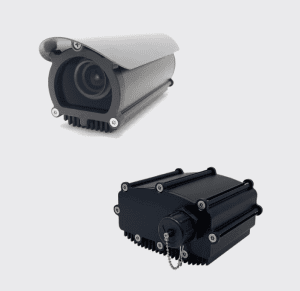
Recommendation: Use Sighthound Compute Camera or Compute Node discussions when a site needs Sighthound-recommended edge hardware for imaging and processing near the source.
Fact: Detects license plates, recognizes alphanumeric plate strings, and identifies plate regions; Sighthound states its LPR models can read alphanumeric plates globally, with region recognition documented for US states, Canadian provinces/territories, and European Union countries.
Fact: Returns vehicle make, model, color, and generation so evaluators can identify vehicles even when the license plate is not visible; Sighthound notes vehicle-recognition models are primarily trained for US, Canada, and EU vehicle markets.
Fact: Detects multiple object classes documented by Sighthound, including vehicles, trucks, buses, motorbikes, people, bicycles, faces, and license plates, depending on the API or SIO pipeline configuration.
Fact: Monitors objects across frames in real time; SIO exposes tracker configuration options such as useTracker for stream workflows where tracking is needed and hardware headroom supports the performance cost.
Fact: The ALPR+ product page lists vehicle type and orientation identification. Recommendation: Confirm the exact output fields required for a buyer’s workflow in the Test Drive or Developer Portal before committing integration requirements.
Fact: REST and SIO workflows return detailed vehicle and license plate annotations in JSON, including detection coordinates, scores, plate string/region, vehicle color, and make/model/generation fields.
Fact: The product page lists on-premise deployment. Recommendation: Position this path for organizations that need to keep processing inside their own environment and manage infrastructure directly.
Fact: The product page lists cloud deployment. Recommendation: Position this path for teams that prioritize scalable access, remote management, and centralized API workflows.
Fact: The product page lists edge devices. Recommendation: Position this path when lower latency, reduced upstream bandwidth, or processing near the camera is part of the evaluation.
Fact: The product page and SIO documentation document Windows and Linux support. Recommendation: Align this path to the buyer’s existing operating-system standards.
Fact: The self-hosted REST API guide uses Docker Compose for a REST gateway, SIO Vehicle Analytics, and a browser-based UI demo. Recommendation: Use Docker for repeatable self-hosted evaluation and deployment planning.
Fact: Sighthound documents REST calls, SIO pipelines, RTSP input, RabbitMQ/Aqueduct control, and Python output extensions. Recommendation: Use this path for systems integrators that need vehicle analytics to fit existing systems.
POST /v11/images:annotate using image URLs or base64 image content, with VEHICLE_DETECTION and LICENSE_PLATE_DETECTION feature requests and JSON responses.Fact: Sighthound notes ALPR+ can work with almost any IP camera, while specialized LPR cameras are recommended for fast-moving vehicles such as highway scenarios. Recommendation: Validate actual site images before relying on existing camera views.
Fact: The product page recommends Sighthound Compute Camera for optimal performance and lists edge processing, high-resolution imaging, flexible lens options, rugged IP67 design, and open-platform positioning among hardware features.
Fact: The product page recommends Sighthound Compute Node alongside Compute Camera for optimal ALPR+ performance. Recommendation: Discuss Compute Node when the evaluation needs Sighthound edge compute close to existing video sources.
Sources/caveat: ALPR+ detailed product page, official ALPR+ product listing, ALPR+ test drive, Sighthound Developer Portal, Vehicle Analytics REST API Docker guide, Vehicle Analytics hosted preview guide, SIO quickstart, and VehicleAnalytics pipeline reference pages accessed Jun. 5, 2026; facts are separated from recommendations, and pricing, certification, market-share, and independent benchmark claims are intentionally omitted from this section.
Sighthound ALPR+ — ICP & Personas
Best-fit ALPR+ opportunities are teams that need more than a plate read: they need MMCG vehicle identification, deployment control for private, restricted, or air-gapped environments, API-first integration, and a no-friction way to validate results through the free Test Drive.
Vertical: Law enforcement & public safety
Buying role: Budget owner
Primary pain point: Plate-only evidence does not always resolve BOLO, partial-plate, no-plate, or post-incident investigation workflows.
Key capability needs: MMCG analytics, BOLO alert support, searchable vehicle attributes, on-premise or edge deployment, Docker-based and air-gapped deployment planning, existing-camera compatibility, and controlled data retention.
Buying influence level: High — sponsors the operational need and secures approval with IT, legal, and procurement.
Trigger event: Crime spike, investigative backlog, grant-funded camera expansion, privacy policy update, or replacement of aging fixed/mobile LPR hardware.
Most likely competitor in evaluation: Flock Safety — official LPR positioning covers law enforcement agencies, real-time alerts, vehicle detail search, audit trails, and a national LPR network.
Success metrics: Faster vehicle-of-interest identification, higher percentage of actionable searches from incomplete vehicle data, shorter investigation cycle time, and fewer manual video review hours.
Common objections: “We already use a public-safety LPR network,” “Will this fit our data-retention policy?” and “Can we validate results before procurement?”
Best talk track phrase: “Use the Test Drive to compare the same images, then decide whether controlled deployment plus MMCG gives your investigators more usable vehicle leads.”
Fair-fit note: If the primary need is turnkey access to an existing shared LPR network, Flock may be the cleaner fit; position ALPR+ when local control, camera flexibility, or deeper vehicle attributes matter more.
Vertical: Parking, EV & access control
Buying role: Operational recommender
Primary pain point: Manual permit checks, EV bay misuse, overstays, and gate exceptions create enforcement cost, customer friction, and poor occupancy visibility.
Key capability needs: Accurate plate reads at entrances/exits, vehicle attribute confirmation, EV-zone and overstay workflows, API handoff to parking/payment systems, low-latency edge processing, and on-premise options for sensitive sites.
Buying influence level: Medium-high — defines operational requirements and influences the final platform choice with finance and IT.
Trigger event: Virtual-permit rollout, gateless parking initiative, EV charging enforcement need, new garage opening, or pressure to reduce manual patrol routes.
Most likely competitor in evaluation: Genetec AutoVu — official AutoVu parking pages cover parking enforcement, virtual permits, gateless parking, occupancy insights, and unified parking/security operations.
Success metrics: Fewer manual patrol hours, higher permit/overstay detection coverage, faster gate exception handling, better occupancy reporting, and improved customer throughput.
Common objections: “Will it integrate with our parking platform?” “Can it handle low-speed gate reads and lot occupancy?” and “Do we need to replace cameras?”
Best talk track phrase: “Start with a camera and workflow fit check: ALPR+ can validate plates and vehicle attributes, then send structured results into the systems you already run.”
Fair-fit note: If the buyer is already standardized on Genetec Security Center and wants parking/security unification above all else, AutoVu may have a natural incumbent advantage.
Vertical: Smart city, ITS & tolling
Buying role: Technical gatekeeper
Primary pain point: Legacy roadside systems are difficult to modernize, integrate, and govern across high-volume traffic, tolling, enforcement, and city-mobility programs.
Key capability needs: Real-time and batch processing, RTSP support, Docker deployment, Windows/Linux support, edge/on-premise/cloud options, JSON output, RabbitMQ integration, and vehicle attributes beyond plate strings.
Buying influence level: High — validates architecture, integration risk, and deployment feasibility before procurement advances.
Trigger event: Smart corridor project, tolling modernization, congestion or emissions-zone program, traffic analytics refresh, or requirement to keep processing inside controlled infrastructure.
Most likely competitor in evaluation: Adaptive Recognition Carmen/Vidar — official pages cover traffic monitoring, tolling, smart city applications, ANPR/MMR cameras, SDKs, and logistics-adjacent recognition products.
Success metrics: Integration readiness, lower rework on existing camera infrastructure, reliable structured outputs, deployment acceptance by IT/security, and improved vehicle classification for analytics.
Common objections: “Can it meet our roadway capture conditions?” “How does it integrate with existing ITS middleware?” and “Who is responsible for legal enforcement validation?”
Best talk track phrase: “Use ALPR+ as a software-first vehicle analytics layer where deployment control, Docker repeatability, and MMCG-enriched outputs are more valuable than a hardware-only refresh.”
Fair-fit note: If the RFP requires a turnkey certified roadside enforcement stack or specialized traffic camera hardware, a hardware-led vendor may be better suited.
Vertical: Retail, QSR & automotive services
Buying role: Operational recommender
Primary pain point: Vehicle visits are disconnected from loyalty, service-lane, order-status, queue-time, and customer-experience workflows.
Key capability needs: Fast vehicle recognition at low-speed approaches, MMCG for no-plate or partial-plate cases, API integration to CRM/POS/service systems, JSON output, camera flexibility, and a quick image-based proof path.
Buying influence level: Medium — builds the use case and proof of value before IT and finance validate scale-up.
Trigger event: Drive-thru speed initiative, loyalty personalization program, service-lane automation project, customer pickup expansion, or loss-prevention incident tied to a vehicle.
Most likely competitor in evaluation: Plate Recognizer Stream — official Stream use cases include parking management, police surveillance, car wash, drive-thru, payment automation, and operational workflows.
Success metrics: Shorter queue times, faster vehicle-to-customer matching, higher automated check-in accuracy, fewer manual lookups, and better repeat-visit visibility.
Common objections: “Will plate recognition work in our lanes?” “Can it connect to store systems?” and “Is this too technical for operations to manage?”
Best talk track phrase: “Have operations upload real site images first; if ALPR+ returns the plate and vehicle attributes reliably, the API conversation becomes much easier.”
Fair-fit note: If the buyer primarily wants broad restaurant video analytics, POS fraud monitoring, and multi-camera store operations rather than vehicle identity workflows, a broader video intelligence platform may fit better.
Vertical: Transportation & logistics
Buying role: Operational recommender
Primary pain point: Manual gate logs, missed arrivals, dock congestion, dwell-time uncertainty, and weak auditability slow down high-volume vehicle movement.
Key capability needs: Gate and yard recognition, vehicle attribute capture, batch and real-time processing, edge/on-premise deployment, API export to yard or fleet systems, and offline-friendly architecture planning.
Buying influence level: Medium-high — owns operational outcomes and pushes the business case to IT, security, and finance.
Trigger event: New distribution center, carrier SLA pressure, gate automation project, cargo-loss incident, facility security upgrade, or need to reduce manual check-in staffing.
Most likely competitor in evaluation: Adaptive Recognition Carmen Worker/Carmen GO — official pages list transportation and logistics, parking management, traffic enforcement, retail/commercial centers, and on-premise/offline recognition use cases.
Success metrics: Faster gate throughput, lower manual check-in time, better dwell and exception visibility, fewer unidentified vehicles, and smoother integration with yard-management workflows.
Common objections: “Can it operate if connectivity is limited?” “Can it distinguish similar vehicles?” and “Will it fit our existing cameras and gate systems?”
Best talk track phrase: “ALPR+ is strongest when the yard needs controlled deployment plus vehicle attributes that make gate events more useful than plate reads alone.”
Fair-fit note: If the project requires container, rail, or hazardous-goods code recognition in addition to vehicle ALPR, Adaptive Recognition’s specialized logistics portfolio may be stronger.
Vertical: Developer, OEM & systems integrator
Buying role: Technical gatekeeper
Primary pain point: The team needs embeddable vehicle intelligence without forcing customers into a single hosted workflow, hardware stack, or opaque integration path.
Key capability needs: REST API, JSON responses, Docker service deployment, RTSP support, RabbitMQ integration, Python customization, Windows/Linux support, no-sign-up Test Drive, and repeatable self-hosted or air-gapped proof environments.
Buying influence level: High — owns technical validation and can block or accelerate vendor selection.
Trigger event: Customer RFP, new vehicle-analytics product feature, incumbent API cost/performance concern, migration from prototype to production, or need for a self-hosted deployment option.
Most likely competitor in evaluation: Plate Recognizer — official pages publish API/Stream workflows, cloud/on-premise deployment, webhooks, JSON/CSV output, free trials, and developer-friendly pricing context.
Success metrics: Faster prototype, clean API handoff, stable self-hosted deployment, lower integration rework, and stronger recognition results on customer-provided images.
Common objections: “How fast can we test?” “Can we run this in our environment?” “Is there enough API control?” and “How does current pricing work?”
Best talk track phrase: “Start with the no-sign-up Test Drive, inspect the JSON, then prove the same workflow through REST, Docker, RTSP, and your integration stack.”
Fair-fit note: If the buyer requires a traditional SDK with specific language bindings or public self-serve pricing above deployment flexibility, another developer-first ALPR vendor may remain competitive.
| Fastest close | Highest ACV | Highest volume |
|---|---|---|
| Developer / Integrator Solutions Architect Shortest proof path because the no-sign-up Test Drive, REST/JSON output, and Docker deployment map directly to technical validation. |
Smart City / ITS Program Manager [ESTIMATED] Largest representative expansion potential when ALPR+ is part of a corridor, tolling, traffic, or multi-site infrastructure modernization program. |
Parking & EV Operations Director [ESTIMATED] Broadest repeatable motion across campuses, municipalities, private operators, EV charging sites, access control, and gateless parking workflows. |
| Runner-up: Retail/QSR operator when a single-lane test can prove service-lane value quickly. | Runner-up: Law enforcement command buyer when deployment spans fixed, mobile, and investigative workflows. | Runner-up: Developer/integrator channel when ALPR+ becomes embedded into repeatable customer deployments. |
Pricing and compliance caveat: ALPR+ pricing is not publicly listed; contact the Sighthound sales team at sighthound.com/contact-us, and buyers are responsible for legal/compliance determinations.
Sighthound ALPR+ — Competitor Profiles
Each profile uses official vendor pages accessed June 5, 2026. Sighthound ALPR+ win themes reference official ALPR+ and developer documentation for MMCG, API-first REST/JSON output, RTSP/RabbitMQ integration, camera-agnostic operation, Windows/Linux/Docker/custom deployment, and ALPR Engine OEM integration.
Official source URLs: rekor.ai/software/scout. Access date: June 5, 2026.
Positioning: Rekor Scout is positioned as a software ALPR product that can turn nearly any IP, traffic, or security camera into a license plate reader. Its official page emphasizes cloud-hosted, self-hosted, and on-premise workflows, public pricing tiers, hotlists, searchable reads, and vehicle attributes in higher tiers.
Deployment modes: Cloud [VERIFIED]; on-prem [VERIFIED]; edge [VERIFIED]; hardware-only [not publicly documented].
Pricing model: Basic $12/month per camera; Pro $72/month per camera; Enterprise custom per license.
Strengths: Camera flexibility is strong because Scout states it works with nearly any IP, traffic, or security camera. Public pricing helps buyers self-qualify Basic and Pro tiers without waiting for sales. The platform supports operational workflows such as hotlists, searchable vehicle records, and make/model/color/direction attributes in Pro or Enterprise tiers.
Weaknesses: Advanced vehicle attributes are not included in every public tier, so value depends on selecting Pro or Enterprise. Enterprise pricing is still custom, limiting full TCO visibility for larger deployments. Official Scout packaging is ALPR-platform oriented rather than an OEM engine tier for embedding vehicle analytics into another product.
Sighthound ALPR+ win themes: Use ALPR+ when the buyer needs documented MMCG vehicle attributes as a core recognition outcome, not only a higher-tier add-on. Use ALPR+ when the architecture decision centers on REST/JSON, RTSP, RabbitMQ, Windows, Linux, Docker, or custom integration paths that must fit an existing system. Use the ALPR Engine OEM tier when a product team wants embeddable recognition instead of adopting a finished Scout workflow.
Discovery questions: Which vehicle attributes need to be included in the first production phase, and which can wait for a later tier or package? How much control does your team need over where recognition runs and how results are delivered into downstream systems?
Scenarios where the competitor wins: Rekor is a legitimate fit when a buyer wants transparent self-serve per-camera pricing and a packaged ALPR workflow. Rekor can also win when the organization already prefers its Scout user experience, hotlist tooling, and Rekor ecosystem.
Official source URLs: vaidio.ai/platform, vaidio.ai/solutions/smart-cities. Access date: June 5, 2026.
Positioning: Vaidio is positioned as a broad AI video analytics platform with more than ALPR, including LPR, vehicle make/model analytics, traffic analytics, and smart-city video intelligence. Its official pages emphasize deployment across cameras, VMS integrations, Jetson devices, servers, Kubernetes, cloud, hybrid, and SaaS environments.
Deployment modes: Cloud [VERIFIED]; on-prem [VERIFIED]; edge [VERIFIED]; hardware-only [not publicly documented].
Pricing model: not publicly listed — contact vendor
Strengths: Breadth is a major strength because Vaidio documents 30+ analytics, not only plate recognition. Deployment flexibility is well documented across edge, server, Kubernetes, cloud, hybrid, and SaaS. Integration breadth is strong because the platform states support for any camera and more than 30 VMS integrations.
Weaknesses: Public pricing is not listed, so procurement requires vendor engagement. ALPR is one capability inside a broader video analytics suite, which may add scope for buyers who only need a focused ALPR engine. Official pages do not publicly package a distinct ALPR OEM engine tier for embedding recognition into third-party products.
Sighthound ALPR+ win themes: Use ALPR+ when the buyer wants a vehicle-recognition-specific conversation centered on plate reads plus MMCG rather than a broad analytics suite. Use ALPR+ when the integration proof must start quickly through REST/JSON, RTSP, Docker, Windows, Linux, or RabbitMQ pathways. Use ALPR Engine when the customer’s real requirement is OEM embedding rather than deploying a full video analytics platform.
Discovery questions: Are you looking for a broad video analytics platform, or is the priority a focused ALPR and vehicle attribute engine? Which existing systems need to consume plate and MMCG results, and in what format?
Scenarios where the competitor wins: Vaidio can win when the buyer wants many analytics beyond ALPR from one platform. It can also win when existing VMS integration breadth is the primary buying criterion.
Official source URLs: een.com/product/vehicle-surveillance-package, een.com/product/license-plate-recognition-old, een.com/docs/app-notes/an102. Access date: June 5, 2026.
Positioning: Eagle Eye positions LPR as an add-on capability within its cloud video surveillance ecosystem. Official pages emphasize ONVIF camera support, open APIs, cloud VMS subscriptions, vehicle search by plate and attributes, and rule-based alerts.
Deployment modes: Cloud [VERIFIED]; on-prem [VERIFIED]; edge [not treated as verified]; hardware-only [not publicly documented].
Pricing model: not publicly listed — contact vendor
Strengths: Cloud VMS integration is strong because LPR and VSP are built into the Eagle Eye Cloud VMS motion. Camera compatibility is documented through ONVIF support. The official developer and product pages document API access, plate rules, alerts, and searches by plate, make, color, or body type.
Weaknesses: Public pages position VSP as requiring an Eagle Eye Cloud VMS subscription, which can constrain buyers outside that ecosystem. Pricing is not publicly listed. Official pages describe LPR as a VMS add-on rather than a standalone ALPR OEM engine for third-party products.
Sighthound ALPR+ win themes: Use ALPR+ when the buyer needs vehicle intelligence without first standardizing on a specific VMS subscription. Use ALPR+ when camera-agnostic recognition, REST/JSON, RTSP, RabbitMQ, Docker, Windows, and Linux deployment flexibility are more important than VMS-native workflow. Use ALPR Engine when the prospect needs recognition embedded into their own application rather than purchased as a surveillance add-on.
Discovery questions: Is your ALPR decision tied to a broader cloud VMS standardization, or do you need recognition to fit multiple video environments? Which downstream applications need access to plate and vehicle attribute data outside the VMS?
Scenarios where the competitor wins: Eagle Eye can win when the buyer already runs Eagle Eye Cloud VMS and wants a native add-on. It can also win when centralized cloud video operations are more important than standalone ALPR deployment control.
Official source URLs: platesmart.com. Access date: June 5, 2026.
Positioning: PlateSmart positions itself as a camera-brand-agnostic ALPR provider for law enforcement, commercial, and security operations. Its official site emphasizes on-premise servers or private cloud, integration with current video/security systems, CJIS-oriented controls, audit trails, evidence sealing, and no customer-data monetization.
Deployment modes: Cloud [VERIFIED]; on-prem [VERIFIED]; edge [not publicly documented]; hardware-only [not publicly documented].
Pricing model: not publicly listed — contact vendor
Strengths: Camera-agnostic positioning is clear because PlateSmart states it works with existing cameras and video systems. Security and evidentiary messaging is strong through CJIS, cryptographic sealing, audit trails, and data-ownership claims. Deployment control is documented through on-premise server and private cloud options.
Weaknesses: Pricing is not publicly listed. Official pages reviewed do not publicly document a packaged OEM ALPR engine tier. Edge deployment and detailed developer integration options are less explicit publicly than the on-premise/private-cloud positioning.
Sighthound ALPR+ win themes: Use ALPR+ when the buyer needs a documented API-first path with REST/JSON, RTSP, RabbitMQ, Docker, Windows, and Linux integration details. Use ALPR+ when MMCG outputs are central to the value story, especially for partial-plate or no-plate workflows. Use ALPR Engine when a systems integrator wants embeddable recognition rather than a full vendor-managed ALPR platform.
Discovery questions: Beyond the ALPR interface, which applications need direct programmatic access to recognition results? Are vehicle make, model, color, and generation outputs part of the operational requirement?
Scenarios where the competitor wins: PlateSmart can win when CJIS-oriented evidence handling, private cloud/on-premise control, and audit messaging are the dominant requirements. It can also win where an agency already trusts PlateSmart as its ALPR platform provider.
Official source URLs: flocksafety.com/products/license-plate-readers. Access date: June 5, 2026.
Positioning: Flock Safety positions its license plate readers as a managed public-safety network with camera hardware, installation, maintenance, upgrades, support, real-time alerts, searchable vehicle data, retention controls, and permission/audit features. The product family includes fixed, long-range, trailer, flex, and video integration options.
Deployment modes: Cloud [VERIFIED]; on-prem [not publicly documented]; edge [not treated as verified]; hardware-only [not publicly documented].
Pricing model: not publicly listed — contact vendor
Strengths: Managed deployment is strong because subscription packaging includes installation, maintenance, upgrades, and support. Public-safety workflow depth is strong through real-time alerts, searchable vehicle data, Vehicle Signature, FreeForm, permissions, audits, and retention controls. Flock’s hardware family is broad across standard, long-range, trailer, flex, and video-integration use cases.
Weaknesses: Public pricing is not listed. Official pages position the offering as a managed network and device subscription, not a standalone software engine that customers can self-host. On-premise deployment is not publicly documented on the reviewed official LPR page.
Sighthound ALPR+ win themes: Use ALPR+ when the buyer wants to control deployment across edge, on-premise, cloud, Windows, Linux, Docker, or custom environments instead of buying a managed camera network. Use ALPR+ when the customer needs camera-agnostic recognition against existing IP cameras. Use ALPR Engine when a product or platform team needs ALPR/MMCG embedded into its own workflow rather than adopting a managed hardware service.
Discovery questions: Do you want a managed camera network, or do you need software that can run inside infrastructure you already control? How important is reusing existing cameras versus procuring a vendor-managed camera fleet?
Scenarios where the competitor wins: Flock can win when a public-safety buyer wants a turnkey managed network with installation and ongoing maintenance included. It can also win when participation in Flock’s broader public-safety data ecosystem is a primary requirement.
Official source URLs: lumana.ai/solutions/license-plate-recognition, lumana.ai/pricing, lumana.ai/products/via-1. Access date: June 5, 2026.
Positioning: Lumana positions LPR as part of an AI video security platform that can turn existing cameras into real-time vehicle intelligence. Official pages emphasize plate search, make/model/color/type search, partial-plate workflows, alerts, gate access integrations, hybrid-cloud operation, and licensing based on camera feeds, storage days, and license terms.
Deployment modes: Cloud [VERIFIED]; on-prem [VERIFIED]; edge [VERIFIED]; hardware-only [not publicly documented].
Pricing model: not publicly listed — contact vendor
Strengths: Existing-camera reuse is strong because Lumana states it turns any camera into ALPR. Search breadth is documented through plate, make, model, color, type, and incomplete-plate search. The platform story is strong for security teams because VMS, Core, Via-1, hybrid cloud, and outage-resilient local operation are part of the official product narrative.
Weaknesses: Public price amounts are not listed. ALPR is positioned inside a broader video security platform, which may be more scope than buyers need for an ALPR-only engine. Official pages do not publicly present a separate OEM ALPR Engine tier for embedding recognition into third-party products.
Sighthound ALPR+ win themes: Use ALPR+ when the prospect wants a focused ALPR/MMCG engine rather than a broader VMS replacement or security platform. Use ALPR+ when technical validation depends on REST/JSON, RTSP, RabbitMQ, Docker, Windows, or Linux details. Use ALPR Engine when the buyer needs embeddable recognition inside an existing product instead of a complete surveillance platform.
Discovery questions: Is the project mainly an ALPR integration, or are you also replacing your VMS and broader video security workflow? Which recognition outputs need to be consumed by your access-control, analytics, or business systems?
Scenarios where the competitor wins: Lumana can win when the buyer wants LPR bundled with a modern AI VMS and security workflow. It can also win where replacing or consolidating video infrastructure is the primary project driver.
Official source URLs: briefcam.com/products/protect-insights, briefcam.com/company/faq/how-is-pricing-determined-for-briefcam-nexus, BriefCam Nexus Datasheet, June 2025. Access date: June 5, 2026.
Positioning: BriefCam positions LPR as one capability inside a broader video analytics platform for review, response, research, alerting, and business-intelligence workflows. Official materials emphasize patented Video Synopsis, searchable object and attribute filtering, multi-site Nexus hub-and-site deployments, local processing, and LPR recognition from cameras rather than a standalone ALPR-only product.
Deployment modes: Cloud [VERIFIED]; on-prem [VERIFIED]; edge [not publicly documented]; hardware-only [not publicly documented].
Pricing model: not publicly listed — contact vendor
Strengths: Video investigation workflow depth is strong because LPR sits inside a broader searchable video analytics platform. Patented Video Synopsis condenses long surveillance periods into a shorter review experience with object and attribute filtering. Nexus supports multi-site local processing with a central hub aggregating alerts and business-intelligence metadata.
Weaknesses: Public price information is not listed. LPR is packaged as part of a broad video analytics and investigation platform rather than a standalone ALPR engine. Official FAQ materials document NVIDIA GPU requirements and note that virtual deployments are possible but optimal performance is not guaranteed.
Sighthound ALPR+ win themes: Use ALPR+ when the customer wants a focused vehicle analytics layer with MMCG and plate outputs rather than a full video investigation platform. Use ALPR+ when the proof needs to start from API, Docker, RTSP, or direct integration work instead of platform adoption. Use ALPR Engine when the requirement is to embed plate and vehicle recognition inside an existing solution.
Discovery questions: Are you buying a video investigation platform, or do you need an ALPR/MMCG engine to feed systems you already use? What camera conditions and scene constraints must be validated before relying on recognition results operationally?
Scenarios where the competitor wins: BriefCam can win when the buyer’s main requirement is broad video review, response, and research analytics. It can also win when the organization already uses BriefCam or Milestone workflows and wants LPR inside that environment.
Official source URLs: senstar.com/product-resources/analytics-packs, Senstar Video Analytics Datasheet, Senstar Symphony Datasheet, senstar.com/product-resources/symphony-platform-licensing. Access date: June 5, 2026.
Positioning: Senstar positions ALPR as an analytics pack within the Symphony video management, analytics, security management, access control, and sensor-fusion environment. Official materials emphasize reading plates and vehicle markings, multi-lane support, gate-control workflows, searchable logs, vehicle access, and perimeter/security operations.
Deployment modes: Cloud [VERIFIED]; on-prem [VERIFIED]; edge [not publicly documented]; hardware-only [not publicly documented].
Pricing model: not publicly listed — contact vendor
Strengths: Symphony integration is strong for buyers already standardized on Senstar VMS and analytics. Official materials document ALPR, vehicle markings, gate control, multi-lane use, searchable logs, container identification, fleet markings, and support for plates from more than 100 countries. Symphony also documents multi-vendor cameras, ONVIF support, RESTful API availability, and platform licensing options.
Weaknesses: Pricing is not publicly listed. ALPR is tied to Senstar’s VMS/analytics environment rather than presented as an independent API-first ALPR engine. Official licensing materials indicate deeper server API/SDK capabilities depend on Symphony edition, and public materials reviewed do not document Docker or OEM embedding paths for ALPR.
Sighthound ALPR+ win themes: Use ALPR+ when the buyer needs ALPR/MMCG outputs to fit existing systems without adopting a specific VMS analytics pack. Use ALPR+ when documented Docker, Windows, Linux, REST/JSON, RTSP, and RabbitMQ integration paths reduce IT risk. Use ALPR Engine when the customer needs OEM embedding rather than a VMS-bound analytics module.
Discovery questions: Does ALPR need to live inside your VMS, or does it need to serve several operational systems independently? Which deployment and integration requirements must be documented before procurement can approve the architecture?
Scenarios where the competitor wins: Senstar can win when Symphony is already the video management standard. It can also win when the buyer wants ALPR bundled with Senstar perimeter security and VMS analytics.
Official source URLs: intrada.q-free.com/intrada-alpr, intrada.q-free.com, q-free.com/solution/automatic-license-plate-recognition. Access date: June 5, 2026.
Positioning: Q-Free positions Intrada as a hardware-independent ALPR software, SDK, API, and cloud recognition offering for tolling, ITS, and OEM use cases. Official pages emphasize global plate coverage, multiple programming language bindings, broad operating-system support, vehicle class/color/model/make/side recognition, and high-volume licensing experience.
Deployment modes: Cloud [VERIFIED]; on-prem [VERIFIED]; edge [VERIFIED]; hardware-only [not publicly documented].
Pricing model: not publicly listed — contact vendor
Strengths: OEM and SDK fit is strong because Intrada documents SDK/API options and C/C++/C#/.NET with Java and Python bindings. Platform breadth is strong across Windows, Linux, Android, Solaris, ARM, DSP, and managed cloud. Tolling and ITS credibility is reinforced by global plate coverage and a large active-license footprint on official pages.
Weaknesses: Public price amounts are not listed. Official positioning is strongly tolling/ITS and recognition-engine oriented, which may be more specialized than a general commercial ALPR deployment. Buyers seeking a simple packaged sales workflow may need more vendor consultation because pricing and deployment details are enterprise-style.
Sighthound ALPR+ win themes: Use ALPR+ when the buyer wants a simpler camera-agnostic ALPR+ package with MMCG, REST/JSON, RTSP, RabbitMQ, Docker, Windows, and Linux paths documented for sales engineering. Use ALPR+ when vehicle make, model, color, and generation are central to business value outside tolling. Use ALPR Engine when the buyer wants OEM embedding but prefers Sighthound’s ALPR+ deployment and API approach.
Discovery questions: Is the project a tolling-grade recognition engine evaluation, or a broader vehicle analytics deployment across existing cameras? Which development model is easier for your team: SDK integration, REST service integration, or a packaged deployment?
Scenarios where the competitor wins: Q-Free can win when the buyer needs a mature tolling or ITS recognition engine with SDK depth and global plate coverage. It can also win when an existing Q-Free roadside or back-office architecture is already in place.
Official source URLs: tattile.com/anpr-cameras, tattile.com/alpr-camera, tattile.com/vision-solutions/vega-11, tattile.com/applications/stark-ocr-cloud, tattile.com/applications/free-flow. Access date: June 5, 2026.
Positioning: Tattile positions itself as a specialist ANPR/ALPR camera, sensor, and OCR vendor for tolling, enforcement, vehicle tracking, traffic monitoring, parking, and access control. Official pages emphasize embedded processing, rugged camera systems, REST APIs, LTE/storage options, offline operation, Stark OCR Cloud or on-prem OCR, and optional vehicle brand/class/color/model recognition.
Deployment modes: Cloud [VERIFIED]; on-prem [VERIFIED]; edge [VERIFIED]; hardware-only [not treated as verified].
Pricing model: not publicly listed — contact vendor
Strengths: Purpose-built edge hardware is strong because Tattile documents onboard capture and processing in ANPR cameras. Rugged roadside fit is documented through embedded free-flow tolling cameras, LTE/storage options, REST integration, and offline operation. Stark OCR Cloud documents SaaS and on-prem options with REST API and high-availability service positioning.
Weaknesses: Public pricing is not listed. Official positioning is camera-hardware led, which may require hardware refresh when a buyer wants to reuse a heterogeneous camera estate. Official FAQ and product materials indicate lane coverage depends on model, geometry, and plate characteristics, so wider sites may require multiple devices or complementary sensors.
Sighthound ALPR+ win themes: Use ALPR+ when the buyer wants to evaluate recognition on existing IP cameras before committing to purpose-built ALPR cameras. Use ALPR+ when Docker, Windows, Linux, RTSP, REST/JSON, RabbitMQ, and custom integration flexibility matter more than a camera-appliance procurement. Use ALPR+ when MMCG is needed as a software output across varied camera sources.
Discovery questions: Are you planning a new roadside camera procurement, or do you need to extract more value from cameras already installed? Which parts of the workflow must remain software-controlled rather than tied to a specific camera appliance?
Scenarios where the competitor wins: Tattile can win when the project requires purpose-built ANPR cameras for roadside, tolling, or enforcement conditions. It can also win when embedded camera processing and rugged hardware procurement are primary requirements.
Official source URLs: axis.com/en-us/products/axis-license-plate-verifier, developer.axis.com/vapix/applications/license-plate-verifier-api. Access date: June 5, 2026.
Positioning: Axis License Plate Verifier is positioned as an edge-based application running on compatible Axis cameras for parking, access, search, and selected free-flow use cases. Official pages emphasize ACAP/VAPIX openness, vehicle type/color/make/model metadata, selected country support, eLicense procurement, and a 60-day trial.
Deployment modes: Cloud [not publicly documented]; on-prem [not treated as verified]; edge [VERIFIED]; hardware-only [not treated as verified].
Pricing model: not publicly listed — contact vendor
Strengths: Edge operation is strong because recognition runs on compatible Axis cameras. API documentation is strong through VAPIX events, push events, and metadata fields. The Axis ecosystem is a strength for organizations already standardized on Axis camera hardware and ACAP applications.
Weaknesses: Public pricing is not listed and sales run through Axis channels. Deployment depends on selected compatible Axis cameras and countries, which can narrow fit for mixed-camera estates. Official pages position the product as an Axis camera application rather than a camera-agnostic ALPR engine across Windows/Linux/Docker or OEM product embedding.
Sighthound ALPR+ win themes: Use ALPR+ when the buyer must support mixed IP cameras rather than only compatible Axis devices. Use ALPR+ when deployment flexibility across edge, on-premise, cloud, Windows, Linux, Docker, and custom integration is the deciding factor. Use ALPR Engine when a product team needs OEM ALPR/MMCG rather than an app tied to a camera vendor ecosystem.
Discovery questions: Is your camera estate standardized on Axis, or do you need the ALPR layer to work across multiple camera brands? Which deployment controls do IT and security need beyond running analytics on the camera?
Scenarios where the competitor wins: Axis can win when the buyer already owns compatible Axis cameras and wants edge ALPR inside that ecosystem. It can also win when a simple camera-side access-control or parking workflow is enough.
Official source URLs: adaptiverecognition.com/products/vidar-anpr-camera, adaptiverecognition.com/products/carmen-freeflow, adaptiverecognition.com/products/carmen-nano, adaptiverecognition.com/products/carmen-box. Access date: June 5, 2026.
Positioning: Adaptive Recognition positions Carmen and Vidar as a deep portfolio of ANPR/ALPR, MMR, SDK, edge, camera, and traffic/logistics recognition products. Official pages emphasize high-speed capture, multi-lane ANPR, hazardous-material sign recognition, more than 160 country coverage, Windows/Linux support, NVIDIA Jetson edge deployment, and API-based output.
Deployment modes: Cloud [VERIFIED]; on-prem [VERIFIED]; edge [VERIFIED]; hardware-only [not treated as verified].
Pricing model: not publicly listed — contact vendor
Strengths: Portfolio breadth is strong across Vidar cameras, Carmen SDKs, Carmen Nano, and Carmen Box. Traffic and logistics specialization is strong through high-speed, multi-lane, MMR, and hazardous-material recognition capabilities. Technical flexibility is documented through Windows/Linux support, Jetson on-premise deployment, API output, HTTP/S/FTP/SFTP/GDS, and flexible licensing concepts.
Weaknesses: Public price amounts are not listed. The breadth of SDK, camera, appliance, and specialized traffic products may require careful product selection before a simple ALPR proof. Hardware-led or SDK-led buying motions may be more complex than a focused API-first ALPR+ evaluation.
Sighthound ALPR+ win themes: Use ALPR+ when the buyer wants a focused proof of plate plus MMCG results through a REST/JSON service instead of selecting among multiple SDK, camera, and appliance products. Use ALPR+ when existing-camera reuse and Docker-based deployment are more important than purpose-built traffic hardware. Use ALPR Engine when OEM embedding is needed but the buyer wants Sighthound’s ALPR+ API and deployment model.
Discovery questions: Which product form factor best matches the project: SDK, camera, edge appliance, or service API? Are specialized traffic and logistics recognizers required, or is the core requirement plate plus vehicle attribute recognition?
Scenarios where the competitor wins: Adaptive Recognition can win when the buyer needs specialized high-speed traffic, logistics, hazardous-material, or SDK capabilities. It can also win when the RFP requires its purpose-built camera portfolio.
Official source URLs: parkinglogix.com/our-solutions, parkinglogix.com/openspace-ai-camera, parkinglogix.com/guardian-awareness. Access date: June 5, 2026.
Positioning: Parking Logix is primarily positioned around smart parking occupancy, guidance, signs, analytics, and parking operations rather than broad ALPR. Official pages emphasize OpenSpace AI Camera occupancy detection, cloud-based parking insights, API integration, and Guardian Awareness OCR/front-plate speed-awareness workflows.
Deployment modes: Cloud [VERIFIED]; on-prem [not treated as verified]; edge [not treated as verified]; hardware-only [not publicly documented].
Pricing model: not publicly listed — contact vendor
Strengths: Parking operations fit is strong because the official site centers on occupancy, guidance, signs, and parking analytics. OpenSpace AI Camera documents real-time parking data, cloud insights, virtual sensors, and high occupancy accuracy. Guardian Awareness documents OCR/front-plate use for speed-awareness and violation-adjacent workflows.
Weaknesses: Public pricing is not listed. Official pages reviewed do not position Parking Logix as a broad ALPR/MMCG platform for law enforcement, ITS, or OEM embedding. Vehicle make, model, color, generation, and camera-agnostic ALPR engine capabilities are not publicly documented on the reviewed pages.
Sighthound ALPR+ win themes: Use ALPR+ when the buyer needs plate and MMCG vehicle identity rather than parking occupancy alone. Use ALPR+ when the solution must integrate through REST/JSON, RTSP, RabbitMQ, Docker, Windows, Linux, or custom workflows outside a parking platform. Use ALPR+ when existing cameras and multiple vertical use cases matter more than parking-specific guidance hardware.
Discovery questions: Is your primary objective parking occupancy and guidance, or vehicle identity and recognition data? Which non-parking systems need to use the plate and vehicle attribute results?
Scenarios where the competitor wins: Parking Logix can win when the buyer’s main problem is parking occupancy, guidance signage, and lot analytics. It can also win when parking-specific hardware and cloud insights are more important than broad ALPR/MMCG integration.
Official source URLs: perceptics.com/summitt-lpr, perceptics.com/summitt-software-suite, perceptics.com/fixed-camera, perceptics.com/portable-camera. Access date: June 5, 2026.
Positioning: Perceptics positions Summitt LPR as a vendor-agnostic vehicle recognition solution with edge, cloud, and on-premise computing options. Official pages emphasize border, tolling, and vehicle identification applications, up to 90% automation at 99.95% accuracy, up to nine plates in one image, optional make/model/color/type, and fixed or portable purpose-built cameras.
Deployment modes: Cloud [VERIFIED]; on-prem [VERIFIED]; edge [VERIFIED]; hardware-only [not treated as verified].
Pricing model: not publicly listed — contact vendor
Strengths: Border and high-assurance vehicle recognition credibility is strong through Perceptics’ official product focus. Deployment breadth is documented across edge, cloud, and on-premise computing. Summitt LPR’s official claims around automation, accuracy, multi-plate reads, and optional MMCT add-on are strong for controlled vehicle-processing environments.
Weaknesses: Public pricing is not listed. Official positioning is strongest around vehicle-processing and border/tolling contexts, which may be more specialized than general commercial ALPR deployments. Purpose-built camera options may be more than buyers need when they want to test existing cameras first.
Sighthound ALPR+ win themes: Use ALPR+ when the buyer wants a fast software-first proof on existing video sources before a hardware-led deployment. Use ALPR+ when MMCG, REST/JSON, RTSP, RabbitMQ, Docker, Windows, and Linux integration paths are the key acceptance criteria. Use ALPR Engine when a vendor-agnostic embedded recognition tier is the main requirement.
Discovery questions: Are the operating conditions closer to controlled border/tolling lanes or a mixed camera environment? Do you need a full vehicle-processing solution, or an ALPR/MMCG layer that feeds existing systems?
Scenarios where the competitor wins: Perceptics can win when border, tolling, or controlled vehicle-processing requirements dominate. It can also win when the buyer values Perceptics’ purpose-built cameras and Summitt software suite as a complete stack.
Official source URLs: kapsch.net/en/tolling/all-electronic-tolling, kapsch.net/en/tolling/city-tolling-and-clean-air-zones, kapsch.net press release, Feb. 26, 2025. Access date: June 5, 2026.
Positioning: Kapsch TrafficCom positions ANPR inside end-to-end tolling, city tolling, clean-air zone, roadside, enforcement, and back-office programs. Official pages emphasize roadside hardware/software, video-based ANPR for tagless vehicles, cloud or on-premise back offices, large-scale city processing, and a North American ANPR engine for tolling plates.
Deployment modes: Cloud [VERIFIED]; on-prem [VERIFIED]; edge [VERIFIED]; hardware-only [not publicly documented].
Pricing model: not publicly listed — contact vendor
Strengths: Tolling and ITS program depth is strong because ANPR is part of all-electronic tolling, city tolling, clean-air zones, enforcement, and back-office systems. Deployment flexibility is documented at the back-office level with cloud and on-premise options. The Feb. 26, 2025 official release documents a North American ANPR engine focused on 58 jurisdictions and more than 150 plate types.
Weaknesses: Public pricing is not listed. Official materials position ANPR as a component of larger tolling and ITS systems rather than a standalone ALPR+ style product for broad commercial use. The buying motion may be heavier than needed for customers seeking only a recognition engine or API integration.
Sighthound ALPR+ win themes: Use ALPR+ when the project is a software-first vehicle analytics layer rather than a full tolling or urban access-control program. Use ALPR+ when the customer wants camera-agnostic deployment plus MMCG outputs through REST/JSON, RTSP, RabbitMQ, Docker, Windows, or Linux. Use ALPR Engine when the buyer needs recognition embedded in an existing ITS or product workflow without procuring a full roadside system.
Discovery questions: Is the procurement for an end-to-end tolling or city access program, or for a recognition service that existing systems will consume? Which parts of the architecture must remain under your team’s control versus a turnkey ITS vendor?
Scenarios where the competitor wins: Kapsch can win when the buyer needs a full tolling, enforcement, or city-mobility system. It can also win when existing Kapsch roadside, back-office, or program-management capabilities are already part of the infrastructure roadmap.
Official source URLs: neology.com/solutions/enforcement/products/neoforce-anpr-camera, neology.com/solutions/enforcement, neology.com/solutions/enforcement/products/neoguard. Access date: June 5, 2026.
Positioning: Neology positions ANPR as part of enforcement, road safety, law enforcement, road user charging, and critical infrastructure solutions. Official pages emphasize the neoForce ANPR camera, multi-lane intelligent ANPR, AI detection/classification, vehicles with or without plates, make/model/color/features, mobile enforcement, and neoGuard cloud-hosted SaaS for central search, hotlists, alerts, and sharing.
Deployment modes: Cloud [VERIFIED]; on-prem [not treated as verified]; edge [VERIFIED]; hardware-only [not treated as verified].
Pricing model: not publicly listed — contact vendor
Strengths: Enforcement specialization is strong across traffic enforcement, law enforcement, road user charging, and critical infrastructure. Edge camera capability is strong because neoForce documents multi-lane intelligent ANPR, dual OCR, edge classification, GPS, cellular, and PoE options. Cloud operations are documented through neoGuard SaaS for search, hotlists, alerts, sharing, and central repositories.
Weaknesses: Public pricing is not listed. Official product positioning is hardware and enforcement-solution led, which may be less direct for buyers seeking a camera-agnostic software engine. Public pages reviewed do not present a separate OEM ALPR Engine tier or Docker-style deployment model.
Sighthound ALPR+ win themes: Use ALPR+ when the buyer wants to run recognition on existing IP camera feeds rather than procure specialized ANPR cameras first. Use ALPR+ when documented REST/JSON, RTSP, RabbitMQ, Docker, Windows, Linux, and custom integration options drive the architecture decision. Use ALPR+ when MMCG outputs need to be consumed outside an enforcement platform.
Discovery questions: Is the project centered on enforcement hardware, or on vehicle recognition data that must feed multiple systems? What level of control do you need over the processing environment and API outputs?
Scenarios where the competitor wins: Neology can win when the requirement is an enforcement-focused camera and SaaS stack. It can also win when road user charging or critical-infrastructure enforcement expertise is central to the deal.
Official source URLs: leonardocompany-us.com/lpr, leonardocompany-us.com/lpr/products, leonardocompany-us.com/lpr/elsag-eoc. Access date: June 5, 2026.
Positioning: Leonardo positions ELSAG LPR as a law-enforcement-focused ecosystem spanning fixed, mobile, solar, video, covert, radar, parking, and cloud options. Official pages emphasize data sovereignty, 24/7 support, regulatory compliance, flexible purchase/finance/subscription options, EOC software, CAD/RMS integration, hotlists, alerts, audits, permissions, and vehicle make/type/color.
Deployment modes: Cloud [VERIFIED]; on-prem [not treated as verified]; edge [VERIFIED]; hardware-only [not treated as verified].
Pricing model: not publicly listed — contact vendor
Strengths: Law-enforcement fit is strong through mobile, fixed, solar, video, covert, radar, parking, cloud, and EOC workflows. Operational controls are documented through audits, permissions, mapping, notifications, hotlists, and CAD/RMS integration. Procurement flexibility is supported by official purchase, finance, and subscription language.
Weaknesses: Pricing still requires contacting the vendor. Official pages position ELSAG as a full law-enforcement LPR ecosystem, which may be more scope than buyers need for API-first vehicle analytics. Public pages reviewed do not present Docker, RabbitMQ, or a distinct OEM ALPR Engine tier.
Sighthound ALPR+ win themes: Use ALPR+ when the buyer wants a software-first ALPR/MMCG engine that can fit existing cameras and systems without adopting a full law-enforcement LPR ecosystem. Use ALPR+ when REST/JSON, RTSP, RabbitMQ, Docker, Windows, Linux, and custom integrations are required in the technical proof. Use ALPR Engine when the use case is embedded vehicle recognition rather than ELSAG operational software.
Discovery questions: Are you looking for a complete law-enforcement LPR operating environment, or a recognition layer that integrates with systems you already use? Which deployment and data-sovereignty requirements need to be proven before a pilot?
Scenarios where the competitor wins: Leonardo ELSAG can win when a law-enforcement agency wants a mature fixed/mobile/cloud LPR ecosystem with operational software and support. It can also win when existing ELSAG deployments or procurement vehicles create an incumbent advantage.
Official source URLs: jenoptik.us/products/civil-security/alpr, jenoptik.us/products/civil-security, jenoptik.us/products/civil-security/data-analysis-software, jenoptik.com/sites/gardovia-cost-effective-anpr-camera. Access date: June 5, 2026.
Positioning: Jenoptik positions ALPR inside its civil security portfolio with VECTOR and GardoVia camera systems, deep learning, worldwide plate recognition, vehicle classification, fixed/mobile use, hotlists, rapid-deployment trailers, and data analysis software. Official pages emphasize more than 40 years of civil-security experience, hardware/software from one source, high-speed multi-lane recognition, and retention controls.
Deployment modes: Cloud [not publicly documented]; on-prem [not treated as verified]; edge [VERIFIED]; hardware-only [not treated as verified].
Pricing model: not publicly listed — contact vendor
Strengths: Civil-security and enforcement credibility is strong through decades of official portfolio positioning. Purpose-built camera capability is strong across VECTOR, GardoVia, fixed, mobile, high-speed, multi-lane, and rapid-deployment trailer use cases. Data analysis support is documented through TraffiData, hotlists, filters, real-time analysis, and configurable retention/deletion controls.
Weaknesses: Public pricing is not listed. Official positioning is hardware/software civil-security solution led, which may be heavier than a focused API-first ALPR proof. Public pages reviewed do not emphasize camera-agnostic reuse, Docker deployment, RabbitMQ integration, or OEM engine packaging.
Sighthound ALPR+ win themes: Use ALPR+ when the buyer needs to start with existing cameras and software deployment flexibility rather than civil-security camera procurement. Use ALPR+ when MMCG, REST/JSON, RTSP, RabbitMQ, Docker, Windows, and Linux integration requirements must be documented up front. Use ALPR Engine when the buyer needs recognition embedded into another workflow instead of a complete enforcement camera stack.
Discovery questions: Are you procuring a full civil-security camera system, or validating recognition software against your current infrastructure? Which existing systems need structured plate and vehicle attribute data?
Scenarios where the competitor wins: Jenoptik can win when the project requires purpose-built enforcement cameras, rapid-deployment trailers, and civil-security data analysis software. It can also win when worldwide plate coverage and integrated hardware/software procurement are top requirements.
Official source URLs: ndi-rs.com/company-profile, ndi-rs.com/how-alpr-works, ndi-rs.com/type/software, ndi-rs.com/type/mobile-alpr-solutions, ndi-rs.com/type/fixed-alpr-solutions. Access date: June 5, 2026.
Positioning: NDI Recognition Systems positions itself as a manufacturer and provider of custom ALPR hardware and software solutions for law enforcement, military, government, commercial, parking, and critical-infrastructure use cases. Official pages emphasize cameras, processors, VeriPlate, VISCE, PlateParQ, TALON, fixed/mobile/portable systems, hotlists, whitelists, analytics, real-time alerts, and subject-matter support.
Deployment modes: Cloud [VERIFIED]; on-prem [VERIFIED]; edge [VERIFIED]; hardware-only [not treated as verified].
Pricing model: not publicly listed — contact vendor
Strengths: Full-stack ALPR ownership is strong because NDI develops cameras, software, processors, and services. Fixed, mobile, and portable coverage is documented across roadways, vehicles, trailers, parking, and covert workflows. Software depth is documented through hotlist synchronization, whitelist databases, reporting, real-time intelligence, command dispatch integration, VISCE cloud/on-premise back office, and TALON recognition engine.
Weaknesses: Public pricing is not listed. Official pages emphasize NDI cameras, processors, and software as a complete provider stack, which may be less attractive when the buyer wants a lightweight software-only layer. Public pages reviewed do not document MMCG generation, Docker deployment, RabbitMQ integration, or an OEM engine tier for third-party product embedding.
Sighthound ALPR+ win themes: Use ALPR+ when the buyer wants to validate recognition on existing IP cameras rather than commit to a full vendor hardware/software stack. Use ALPR+ when MMCG outputs, REST/JSON, RTSP, RabbitMQ, Docker, Windows, and Linux deployment details are central to the architecture review. Use ALPR Engine when the customer needs embeddable recognition in another product rather than a complete ALPR system provider.
Discovery questions: Do you need a turnkey ALPR hardware/software provider, or a recognition layer that fits an existing camera and application architecture? Which integration outputs and deployment environments must be proven during the pilot?
Scenarios where the competitor wins: NDI can win when the buyer wants a long-running full-stack ALPR vendor with fixed, mobile, portable, software, and support capabilities. It can also win when agency procurement favors NDI’s cameras, processors, VeriPlate, VISCE, PlateParQ, or TALON ecosystem.
Sighthound ALPR+ — Feature Comparison
| Feature | Sighthound ALPR+1 | Flock Safety2 | Rekor Scout3 | Plate Recognizer4 | Genetec AutoVu5 | Sighthound Advantage |
|---|---|---|---|---|---|---|
| LPR coverage | Yes | Yes | Yes | Yes | Yes | Core plate recognition is table stakes; ALPR+ advantage is combining LPR with documented MMCG, object detection, and flexible deployment in the same product story. |
MMCG analytics |
Yes | Partial | Partial | Partial | Partial | ALPR+ documents make, model, color, and generation; cited competitors document vehicle attributes such as make/model/color, type, year, or unique features, but not the same full MMCG package as a public core claim. |
| Object detection | Yes | Partial | Partial | Partial | Partial | ALPR+ publicly documents broader object recognition beyond plates and vehicles; competitors primarily document vehicle, plate, or vehicle-attribute detection. |
| Real-time processing | Yes | Yes | Yes | Yes | Yes | Parity on real-time alerts and live processing; ALPR+ advantage is keeping real-time processing available across on-premise, cloud, edge, and Docker deployment paths. |
| On-premise deployment | Yes | ? | Yes | Yes | Yes | ALPR+ matches self-hosted competitors and has a clearer advantage against managed-network products where customer-controlled on-premise deployment is not publicly documented. |
| Cloud deployment | Yes | Yes | Yes | Yes | Partial | ALPR+ offers cloud without forcing a cloud-only architecture; Flock and Rekor are strong cloud peers, while Genetec cloud processing is documented through adjacent Cloudrunner/read-data paths. |
| Edge/IoT deployment | Yes | Partial | Yes | Yes | Yes | ALPR+ competes with edge-capable vendors while retaining a camera-agnostic software route; Flock documents deployable LTE/solar cameras but not customer-controlled edge processing in the cited pages. |
| Air-gapped support | Yes | ? | Partial | Yes | ? | No forced win: Plate Recognizer clearly documents no-internet operation, and Rekor documents offline SDK operation; ALPR+ remains differentiated when air-gapped needs also require Docker, REST, RTSP, and MMCG together. |
| REST API | Yes | Partial | Yes | Yes | Partial | ALPR+ keeps REST/JSON central to technical validation; some competitors expose APIs only for authorized integrations, product subsets, exports, SDKs, or platform-specific workflows. |
| Docker | Yes | ? | Yes | Yes | ? | ALPR+ has parity with developer-first vendors that publish Docker paths and an advantage over managed camera/VMS ecosystems where Docker deployment is not publicly documented. |
| Global alphanumeric plate support | Yes | Partial | Partial | Partial | Partial | ALPR+ documents worldwide alphanumeric plate recognition with region recognition for US states, Canadian provinces/territories, and EU countries; keep country-count comparisons source-specific rather than presenting unsupported parity rankings. |
`?` means the capability was not publicly documented in the cited official sources; it is not treated as an absence claim.
Sighthound ALPR+ — Pricing Analysis
ALPR+ current pricing is not publicly listed; use this table to frame model differences, then direct buyers to sighthound.com/contact-us for a current Sighthound quote and to each competitor for a current competing quote.
Select two competitors, then choose Compare to view pricing details side by side.
| Vendor | Pricing model type | Public pricing status / figures | Source URL and access date | Sales-use note |
|---|---|---|---|---|
| Sighthound ALPR+ | Custom quote / sales-led ALPR+ pricing | Current ALPR+ pricing is not publicly listed. Historical ALPR Pro from $29/camera/month [2023 press release — may be outdated; verify with sales team]; ALPR Free tier referenced in the same dated release [2023 press release — may be outdated; verify with sales team]. | ALPR+ product page, ALPR launch release, and contact page; accessed June 5, 2026. | Do not use the historical ALPR Pro figure as an ALPR+ quote. Send buyers to sales for current pricing. |
| Plate Recognizer | Per-lookup Snapshot pricing; per-camera Stream pricing | Snapshot lists Free 2,500 lookups/month, Small $50/month for 50,000 lookups, Medium $150/month for 250,000 lookups, Large $250/month for 500,000 lookups, plus 50% for vehicle make/model/color/orientation. Stream lists $35/camera/month or $45/camera/month with MMC. | Plate Recognizer pricing; accessed June 5, 2026. | Best public benchmark for per-lookup economics; validate tier, MMC, support, deployment, and overage assumptions with the vendor. |
| Rekor | Per-camera subscription with Enterprise custom per-license contracting | Official Rekor Scout documentation lists Basic at $12/month per camera and Pro at $72/month per camera; Enterprise is sales-contract / per-license. | Rekor Scout official page and Rekor Scout subscriptions and licensing documentation; accessed June 5, 2026. | Use official documentation as a budgetary input only; ask the buyer to obtain a current Rekor quote for scope, retention, hosting, and enterprise terms. |
| Flock Safety | Hardware bundle plus cloud subscription / managed network model | Not publicly listed — contact vendor. | Flock LPR product page; accessed June 5, 2026. | Compare total bundle scope: cameras, installation, maintenance, support, retention, network participation, and replacement cycles. |
| Leonardo ELSAG | Government / public-safety procurement contract | Not publicly listed — contact vendor. | Leonardo LPR page, Leonardo LPR products; accessed June 5, 2026. | Frame as quote-led public-safety ecosystem procurement, not a self-serve software subscription. |
| Jenoptik | Government / civil-security procurement contract | Not publicly listed — contact vendor. | Jenoptik ALPR page, civil security portfolio; accessed June 5, 2026. | Expect hardware/software project quoting, especially for enforcement, trailers, and roadside deployments. |
| Kapsch TrafficCom | Enterprise infrastructure / tolling contract | Not publicly listed — contact vendor. | Kapsch all-electronic tolling, Kapsch ANPR engine release; accessed June 5, 2026. | Use for enterprise tolling and infrastructure benchmarks, not SMB or departmental subscription benchmarks. |
| Perceptics | Configured vehicle-recognition software and camera solution quote | Not publicly listed — contact vendor. | Perceptics Summitt LPR, Perceptics contact page; accessed June 5, 2026. | Compare as tolling, border, roadway-safety, or access-control solution pricing with implementation services. |
| NDI Recognition Systems | Government / commercial ALPR hardware and software procurement contract | Not publicly listed — contact vendor. | NDI company profile, NDI software, NDI fixed ALPR solutions; accessed June 5, 2026. | Expect quote-led pricing tied to camera, processor, software, support, and deployment scope. |
| Other ALPR vendors in active evaluations | Usually custom quote, reseller quote, or procurement-led contract | Not publicly listed unless a current official pricing page is verified — contact vendor. | Use each vendor’s official product or contact page before quoting; accessed source date must be recorded in the opportunity notes. | Do not reuse third-party pricing snippets; use official pricing pages or current vendor quotes only. |
ALPR+ current pricing is not publicly listed; direct buyers to sighthound.com/contact-us for a custom quote. The competitor estimate below uses Plate Recognizer Snapshot with MMC as the public per-lookup benchmark: 10,000 lookups/camera/month [ESTIMATE], annualized monthly subscription fees [ESTIMATE], and no hardware, storage, tax, support, procurement, or integration costs included [ESTIMATE].
| Scale Point | ALPR+ Est. | Competitor Est. | Delta | Confidence |
|---|---|---|---|---|
| 5 cameras [ESTIMATE] | Custom quote required; no public ALPR+ figure [ESTIMATE]. | 50,000 lookups/month using Plate Recognizer Small + MMC: $75/month, $900/year [ESTIMATE]. | Not calculable until Sighthound quote; competitor public-tier input is $900/year [ESTIMATE]. | ALPR+ low until quote; competitor high for listed tier, medium for full TCO [ESTIMATE]. |
| 25 cameras [ESTIMATE] | Custom quote required; no public ALPR+ figure [ESTIMATE]. | 250,000 lookups/month using Plate Recognizer Medium + MMC: $225/month, $2,700/year [ESTIMATE]. | Not calculable until Sighthound quote; competitor public-tier input is $2,700/year [ESTIMATE]. | ALPR+ low until quote; competitor high for listed tier, medium for full TCO [ESTIMATE]. |
| 100 cameras [ESTIMATE] | Custom quote required; no public ALPR+ figure [ESTIMATE]. | 1,000,000 lookups/month exceeds the single published Large tier; if modeled as two Large + MMC blocks: $750/month, $9,000/year [ESTIMATE; validate with vendor]. | Not calculable until Sighthound quote; competitor input requires custom or multiple-license validation [ESTIMATE]. | Low for both until current quotes confirm enterprise terms [ESTIMATE]. |
Purpose: This is a hypothetical crossover model, not Sighthound pricing. ALPR+ current pricing is not publicly listed, so send buyers to sighthound.com/contact-us for a custom quote before comparing.
Working shown: Assumed per-lookup rate = $0.0015/lookup [ESTIMATE], derived from Plate Recognizer Small + MMC at $75/month for 50,000 lookups. Assumed subscription rate = $45/camera/month [ESTIMATE], based on Plate Recognizer Stream + MMC public pricing. Break-even lookup volume per camera = $45 ÷ $0.0015 = 30,000 lookups/camera/month [ESTIMATE].
| Scale Point | Assumed subscription spend | Break-even lookup volume | Interpretation |
|---|---|---|---|
| 5 cameras [ESTIMATE] | $225/month [ESTIMATE] | 150,000 lookups/month [ESTIMATE] | Above this volume, the modeled per-lookup cost becomes more expensive than the modeled subscription cost [ESTIMATE]. |
| 25 cameras [ESTIMATE] | $1,125/month [ESTIMATE] | 750,000 lookups/month [ESTIMATE] | Use TCO framing when site activity can exceed this modeled lookup threshold [ESTIMATE]. |
| 100 cameras [ESTIMATE] | $4,500/month [ESTIMATE] | 3,000,000 lookups/month [ESTIMATE] | At this scale, quote-level details, deployment architecture, and support terms matter more than public list prices [ESTIMATE]. |
ALPR+ current pricing is not publicly listed; each response should end by offering to obtain a current custom quote through sighthound.com/contact-us rather than using an assumed price.
“If your workload stays light, a per-lookup model can look efficient, so let’s compare it against your expected monthly lookup volume, retention needs, deployment requirements, and integration costs using current vendor quotes; Sighthound ALPR+ pricing is not publicly listed, so I’ll get you a current custom quote instead of anchoring this discussion on an outdated or assumed number.”
“A bundled camera subscription can be the right fit when you want the vendor to manage hardware, installation, maintenance, and cloud operations, but if you already have usable cameras or need edge, on-premise, or custom integration control, the real comparison is total cost of ownership; let’s quote both options and compare the required hardware, services, retention, support, and deployment path.”
“Before renewing the incumbent vendor, let’s ask for the renewal quote and compare total contract cost, included cameras, support, overages, deployment limits, retention, and integration effort against a current Sighthound ALPR+ quote; the goal is not to delay the decision, but to make sure the renewal reflects your current operating requirements.”
ALPR+ current pricing is not publicly listed; use sighthound.com/contact-us to obtain a quote before presenting customer-specific comparisons.
The buyer is running a small proof of concept, comparing self-serve developer tools, asking for a first-pass budget check, or already has current quotes from other vendors. Keep the conversation factual, source-dated, and quote-dependent.
The buyer has many cameras, uncertain lookup volume, public-sector procurement rules, hardware bundle comparisons, integration labor, data-retention requirements, or deployment-control requirements. Use potential and estimated language, and never imply guaranteed savings.
The buyer cares about operational outcomes such as fewer manual reviews, faster investigations, reuse of existing cameras, or controlled deployment. Frame the benefit as hypothetical and validation-dependent, then quantify it only with the buyer’s own current workload and vendor quotes.
For any buyer-ready pricing discussion, direct the prospect to sighthound.com/contact-us so the sales team can provide a current custom ALPR+ quote for the exact deployment scope.
Internal enablement only; all [ESTIMATE] figures require current vendor quotes, and public-sector procurement vehicles may change final pricing.
Sighthound ALPR+ — Positioning Strategy
You can turn fixed, mobile, or aerial imagery into plate, region, make, model, color, and generation leads instead of relying on plate strings alone. You can also keep the recognition workflow aligned to your infrastructure because ALPR+ supports on-premise, cloud, edge, Docker, Windows, Linux, and custom API deployment paths.
You can automate entry, payment, EV bay monitoring, gated access, overstays, and unauthorized-vehicle workflows with plate recognition plus vehicle attributes. You can start with existing IP cameras when the site conditions fit, then add specialized LPR cameras or Sighthound Compute hardware only where the traffic speed or imaging conditions require it.
You can support tolling, traffic enforcement, roadway monitoring, and situational awareness with real-time plate, vehicle type, orientation, tracking, and MMCG analytics. You can run processing at the edge, on local servers, in the cloud, or in Docker so each corridor, agency, or integration partner can use the architecture that fits its operating model.
You can connect vehicle visits to drive-thru, service-lane, loyalty, car wash, and automotive-service workflows through structured vehicle and plate outputs. You can validate real site images in the no-sign-up Test Drive, then use REST JSON outputs and custom integration paths to connect ALPR+ to the systems your operators already use.
You can embed vehicle analytics through REST image calls, Docker self-hosting, SIO pipelines, RTSP stream processing, RabbitMQ control, and Python output customization. You can show buyers exactly what the system returns because ALPR+ exposes plate, region, detection coordinates, make, model, color, and generation in JSON.
When the buyer needs vehicle identity beyond a plate string, lead with ALPR+ Detailed Vehicle Analytics because it returns make, model, color, and generation, exposing the gap in any plate-read-only workflow that cannot support partial-plate, no-plate, or attribute-based searches.
Against managed-network evaluations such as Flock Safety, lead with ALPR+ on-premise, cloud, edge, Docker, Windows, Linux, and custom integration options because Flock’s public LPR page packages cameras, installation, maintenance, upgrades, and support as one subscription rather than documenting customer-controlled self-hosted ALPR software.
Against hardware-led evaluations such as ELSAG, NDI, and Jenoptik, lead with ALPR+ camera flexibility because Sighthound documents that ALPR+ can work with almost any IP camera, while those vendors’ public pages center on ALPR camera systems, fixed/mobile deployments, or hardware portfolios.
Against developer-first tools such as Plate Recognizer, lead with ALPR+ REST API, Docker self-hosting, SIO pipelines, RTSP inputs, RabbitMQ control, and Python output customization when the gap to test is not whether an API exists, but whether the proof can run across the buyer’s image, stream, queue, and custom-output architecture.
Against security-platform incumbents such as Genetec AutoVu, lead with ALPR+ as a standalone vehicle analytics layer with JSON output and custom integration paths because the gap appears when the buyer needs ALPR/MMCG data in systems outside a unified security-platform workflow.
| Do not say | Say instead |
|---|---|
| “We are more accurate.” | “Let’s run your images through the ALPR+ Test Drive and compare the returned plate, region, make, model, color, and generation fields side by side.” |
| “We are not cloud-only.” | “You can choose where ALPR+ runs: local servers, edge devices, cloud, Docker, Windows, or Linux, then design the data path around your infrastructure requirements.” |
| “We beat Flock, Rekor, and Genetec.” | “If the priority is a managed network, a packaged ALPR workflow, or a unified security platform, those vendors may fit; if the priority is controlled deployment, existing cameras, embeddable JSON outputs, or MMCG, ALPR+ is the fit to test.” |
| “ALPR+ is compliant.” | “ALPR+ gives you architecture choices such as on-premise, edge, Docker, and custom integration; your legal and security teams decide whether the final deployment meets your policy requirements.” |
When Flock comes up, I would first acknowledge the fit: if you want a managed public-safety LPR camera network with installation, maintenance, upgrades, support, real-time alerts, audits, retention controls, and shared-network access, that is exactly how its public LPR page is positioned. The reason to evaluate ALPR+ is different. You want the recognition layer to fit your architecture rather than requiring a managed-network architecture. ALPR+ documents on-premise, cloud, edge, Docker, Windows, Linux, custom integration, and existing IP-camera support, and the Test Drive lets you validate your own images before procurement. You also get plate and region recognition plus make, model, color, and generation outputs, including vehicle details when the plate is not visible. So the question is not “which brand is better?” It is “do you want a managed camera network, or do you need controlled deployment and vehicle analytics that can feed your own systems?”
Rekor is a serious comparison because its public Scout page documents nearly-any-IP-camera support, cloud and on-premise options, real-time alerts, webhooks, searchable vehicle data, and make, model, and color in certain plans. I would not argue that ALPR+ is the only flexible option. I would focus the evaluation on the output and integration details that matter in your deployment. ALPR+ documents plate string and region recognition, vehicle make, model, color, and generation, and Sighthound’s FAQ says vehicle details can still be returned when the plate is not visible. On the integration side, ALPR+ has a REST image API, Docker self-hosting, SIO pipelines for files, watched folders, and RTSP streams, RabbitMQ control, and Python output customization. Let’s run the same images and architecture checklist through both vendors: attributes returned, no-plate cases, deployment target, downstream JSON needs, and who owns the production data path.
When a hardware-led vendor is in the deal, I would separate the camera decision from the recognition and data-flow decision. If the buyer needs purpose-built roadside cameras, trailers, high-speed multi-lane capture, or field hardware as the main project, a hardware-led proposal may be the better starting point. If the buyer already has usable IP cameras, mixed sites, or a requirement to send vehicle intelligence into existing applications, ALPR+ deserves a software-first proof. Sighthound documents that ALPR+ can work with almost any IP camera, while recommending specialized LPR cameras for fast-moving highway scenarios, so we can be honest about camera fit. ALPR+ also documents on-premise, cloud, edge, Docker, Windows, Linux, RTSP, REST JSON output, RabbitMQ, and Python customization. The practical next step is to test site images or streams, confirm whether hardware must change, and decide whether the buyer needs a complete camera system or a vehicle analytics layer.
Sighthound ALPR+ — Discovery Questions
Use these questions to qualify pain, deployment constraints, integration needs, camera scale, MMCG requirements, lookup volume, competitive context, and buying timing during ALPR+ discovery calls.
MMCG question: In cases where a plate is partial, obscured, or unavailable, what role should vehicle make, model, color, and generation play in developing leads while keeping the investigation scope clearly defined?
Rationale: ALPR data-retention and usage laws vary by jurisdiction and are actively evolving; this discovers policy scope without assuming a requirement is already met.
Trap question: What flexibility do you need to use existing agency cameras or agency-controlled infrastructure alongside any ALPR systems already in place?
MMCG question: When a plate is unreadable at entry, exit, or an EV bay, how could vehicle make, model, color, and generation help reconcile sessions, permits, access events, or disputes?
Rationale: ALPR data-retention and usage laws vary by jurisdiction and are actively evolving; this frames policy discovery without assuming a specific requirement is already satisfied.
Trap question: Looking back at prior ALPR attempts, what parts of site conditions, operations, integrations, or support made the system difficult to trust?
MMCG question: For roadway analytics, incident review, or exception handling, how would vehicle make, model, color, and generation improve context when the plate read is low confidence or not the primary signal?
Rationale: ALPR data-retention and usage laws vary by jurisdiction and are actively evolving; this invites the prospect to describe governance needs without presupposing a compliance posture.
Trap question: How do you want to test fit with mixed camera environments, multiple agencies, and existing systems before deciding whether a platform change is required?
MMCG question: When plates are unavailable or customers use multiple vehicles, how could vehicle make, color, model, or generation context improve order matching, queue analysis, service recovery, or appointment workflows?
Rationale: ALPR data-retention and usage laws vary by jurisdiction and are actively evolving; this keeps the question focused on the buyer’s policy process rather than assuming legal readiness.
Trap question: How do operators handle exceptions today when plate capture varies across lighting, angle, lane, traffic, or store conditions?
MMCG question: Which downstream features need make, model, color, and generation in the JSON payload when the plate field is missing, low-confidence, or not enough by itself?
Rationale: ALPR data-retention and usage laws vary by jurisdiction and are actively evolving; this checks product governance needs without assuming the buyer or ALPR+ already satisfies a specific rule.
Trap question: How do you compare prototype lookup costs with production lookup volume, stream workloads, self-hosting needs, retries, and attribute outputs before committing?
| Question | Hot Signal | Warm Signal | Cold Signal |
|---|---|---|---|
| Is there a hard deployment or data-control constraint? | On-prem, edge, isolated network, customer-controlled infrastructure, or strict data-path ownership is required. | Deployment control is preferred, but the buyer can evaluate multiple architectures. | A fully managed cloud or turnkey network is acceptable and internal control is not a priority. |
| Do existing systems need structured ALPR+ outputs? | VMS, CAD, RMS, PARCS, ITS, POS, access-control, or product APIs must receive structured results. | One integration is likely, but manual export or a limited pilot could work initially. | No meaningful integration need; a standalone manual workflow is sufficient. |
| Is camera scale and lookup volume defined? | Camera count, reads per camera per day, site count, and growth expectations are quantified. | Pilot scope is known, but production volume and expansion timing need discovery. | The buyer cannot estimate cameras, reads, sites, or growth. |
| Is MMCG important beyond plate reads? | Make, model, color, and generation are needed for partial-plate, no-plate, exception, investigation, or matching workflows. | Vehicle attributes are useful, but not yet tied to a required workflow. | Plate strings alone satisfy the known use case. |
| Is there a real buying path and decision timeline? | Named owner, budget path, pilot success metric, and decision window are clear. | Business interest exists, but owner, funding, or timing needs confirmation. | No owner, no decision date, and no defined success criteria. |
Classification: Hot = 4–5 hot signals; Warm = 2–3 hot signals or one unresolved blocker; Cold = 0–1 hot signals or no defined owner/timeline.
Sales enablement only; confirm retention, usage, and policy decisions with the prospect’s legal and security stakeholders.
Sighthound ALPR+ — Pricing Calculator
Use this specification before any custom quoting conversation. Defaults represent a realistic mid-market deployment scenario, not a scenario engineered to make any vendor appear cheapest.
| Variable name | Input type | Permitted range or options | Default value |
|---|---|---|---|
| Camera count | Slider with numeric readout | 1–500+ cameras; anything above 500 is treated as custom enterprise scope. | 25 cameras |
| Deployment type | Dropdown | On-prem, cloud, edge, air-gapped | Edge |
| Use case vertical | Dropdown | Law enforcement, parking, smart city, retail, developer | Parking |
| Feature tier | Tier selector | Free, Pro, Engine | Pro |
Default scenario: 25-camera edge deployment for a parking or access-control buyer evaluating Pro-tier capabilities. Verify with sales team before presenting any output from this panel.
| ALPR+ tier | Input combinations that map here | Pricing caveat | Sales-use note |
|---|---|---|---|
| Free (limited) | Small evaluation, cloud-only validation, limited users, short retention, or buyer explicitly selects Free. | Historical Free tier reference only [2023 press release — may be outdated; verify with sales team at sighthound.com/contact-us]. | Use only for pre-production validation framing. Do not position as a production pricing quote. |
| Pro (per-camera subscription) | Production deployment across on-prem, cloud, or edge; non-OEM buyer; typical 1–500 camera scenario where per-camera economics matter. | Historical ALPR Pro reference: $29/camera/month [2023 press release — may be outdated; verify with sales team at sighthound.com/contact-us]. | Use as a dated budget anchor only. Current ALPR+ pricing is not publicly listed. |
| Engine (OEM/developer) | Developer vertical, embedded/OEM requirement, custom API packaging, air-gapped architecture, 500+ cameras, or non-standard throughput/hosting terms. | Engine pricing is not publicly listed; verify with Sighthound sales before any numeric comparison. | Use when the buyer needs an embeddable recognition layer, custom integration, or quote-led enterprise scope. |
| Pricing input | Source name and access date | Use in calculator |
|---|---|---|
| Sighthound ALPR+ current pricing | Sighthound ALPR+ product page and contact page; accessed June 5, 2026. | Current ALPR+ pricing is not publicly listed; all Sighthound outputs must be verified by sales. |
| Historical ALPR Pro | Sighthound ALPR launch release; accessed June 5, 2026. | $29/camera/month [2023 press release — may be outdated; verify with sales team at sighthound.com/contact-us] is the only Sighthound numeric pricing anchor used here. |
| Plate Recognizer Snapshot and Stream | Plate Recognizer pricing page; accessed June 5, 2026. | Snapshot: $50/month for 50,000 lookups, $150/month for 250,000 lookups, $250/month for 500,000 lookups, plus 50% for vehicle make/model/color/orientation. Stream + MMC: $45/month per camera. |
| Rekor Scout Basic and Pro | Rekor Scout subscriptions and licensing documentation; accessed June 5, 2026. | Uses official Rekor Scout Basic ($12/month per camera) and Pro ($72/month per camera) plan references as budgetary inputs; Enterprise remains custom and must be quoted by Rekor. |
| Flock Safety and LE hardware vendors | Flock Safety LPR page, Leonardo ELSAG pages, NDI pages, and Jenoptik ALPR pages; accessed June 5, 2026. | No public self-serve pricing is used; treat as hardware bundle, cloud subscription, or procurement-contract quote scenarios. |
| Scale Point | ALPR+ Tier | Est. Annual Cost | Competitor Model | Competitor Est. | Delta | Confidence |
|---|---|---|---|---|---|---|
| 5 cameras [ESTIMATE] | Free (limited) [ESTIMATE] | No current public ALPR+ production price; historical Free tier is limited and caveated [2023 press release — may be outdated; verify with sales team at sighthound.com/contact-us] [ESTIMATE]. | Plate Recognizer Snapshot + MMC; assumes 10,000 lookups/camera/month from Plate Recognizer pricing page, accessed June 5, 2026 [ESTIMATE]. | 50,000 lookups/month: $75/month or $900/year [ESTIMATE]. | Not calculable until current Sighthound quote; competitor public input is $900/year [ESTIMATE]. | Low for ALPR+ cost; medium for public competitor tier math [ESTIMATE]. |
| 25 cameras [ESTIMATE] | Free (limited) [ESTIMATE] | No current public ALPR+ production price; historical Free tier is limited and caveated [2023 press release — may be outdated; verify with sales team at sighthound.com/contact-us] [ESTIMATE]. | Plate Recognizer Snapshot + MMC; assumes 10,000 lookups/camera/month from Plate Recognizer pricing page, accessed June 5, 2026 [ESTIMATE]. | 250,000 lookups/month: $225/month or $2,700/year [ESTIMATE]. | Not calculable until current Sighthound quote; competitor public input is $2,700/year [ESTIMATE]. | Low for ALPR+ cost; medium for public competitor tier math [ESTIMATE]. |
| 100 cameras [ESTIMATE] | Free (limited) [ESTIMATE] | No current public ALPR+ production price; historical Free tier is limited and caveated [2023 press release — may be outdated; verify with sales team at sighthound.com/contact-us] [ESTIMATE]. | Plate Recognizer Snapshot + MMC; assumes 10,000 lookups/camera/month from Plate Recognizer pricing page, accessed June 5, 2026 [ESTIMATE]. | 1,000,000 lookups/month modeled as two Large + MMC blocks: $750/month or $9,000/year [ESTIMATE]. | Not calculable until current Sighthound quote; competitor input may require custom validation [ESTIMATE]. | Low for both until enterprise terms are quoted [ESTIMATE]. |
| 5 cameras [ESTIMATE] | Pro (per-camera subscription) [ESTIMATE] | $1,740/year [ESTIMATE], modeled as 5 × $29/camera/month [2023 press release — may be outdated; verify with sales team at sighthound.com/contact-us] × 12. | Plate Recognizer Stream + MMC from Plate Recognizer pricing page, accessed June 5, 2026 [ESTIMATE]. | $2,700/year [ESTIMATE], modeled as 5 × $45/camera/month × 12. | Competitor higher by $960/year [ESTIMATE]. | Low for ALPR+ historical pricing; high for public competitor list input [ESTIMATE]. |
| 25 cameras [ESTIMATE] | Pro (per-camera subscription) [ESTIMATE] | $8,700/year [ESTIMATE], modeled as 25 × $29/camera/month [2023 press release — may be outdated; verify with sales team at sighthound.com/contact-us] × 12. | Plate Recognizer Stream + MMC from Plate Recognizer pricing page, accessed June 5, 2026 [ESTIMATE]. | $13,500/year [ESTIMATE], modeled as 25 × $45/camera/month × 12. | Competitor higher by $4,800/year [ESTIMATE]. | Low for ALPR+ historical pricing; high for public competitor list input [ESTIMATE]. |
| 100 cameras [ESTIMATE] | Pro (per-camera subscription) [ESTIMATE] | $34,800/year [ESTIMATE], modeled as 100 × $29/camera/month [2023 press release — may be outdated; verify with sales team at sighthound.com/contact-us] × 12. | Plate Recognizer Stream + MMC from Plate Recognizer pricing page, accessed June 5, 2026 [ESTIMATE]. | $54,000/year [ESTIMATE], modeled as 100 × $45/camera/month × 12. | Competitor higher by $19,200/year [ESTIMATE]. | Low for ALPR+ historical pricing; high for public competitor list input [ESTIMATE]. |
| 5 cameras [ESTIMATE] | Pro (per-camera subscription) [ESTIMATE] | $1,740/year [ESTIMATE], modeled as 5 × $29/camera/month [2023 press release — may be outdated; verify with sales team at sighthound.com/contact-us] × 12. | Rekor Scout Basic official pricing from Rekor subscriptions and licensing documentation, accessed June 5, 2026 [ESTIMATE]. | $720/year [ESTIMATE], modeled as 5 × $12/camera/month from official Rekor Scout Basic documentation × 12. | Competitor lower by $1,020/year [ESTIMATE]; show this honestly and verify scope/features. | Medium for published Basic plan math; low for feature, retention, hosting, and enterprise/government fit until a current Rekor quote confirms scope [ESTIMATE]. |
| 25 cameras [ESTIMATE] | Pro (per-camera subscription) [ESTIMATE] | $8,700/year [ESTIMATE], modeled as 25 × $29/camera/month [2023 press release — may be outdated; verify with sales team at sighthound.com/contact-us] × 12. | Rekor Scout Basic official pricing from Rekor subscriptions and licensing documentation, accessed June 5, 2026 [ESTIMATE]. | $3,600/year [ESTIMATE], modeled as 25 × $12/camera/month from official Rekor Scout Basic documentation × 12. | Competitor lower by $5,100/year [ESTIMATE]; show this honestly and verify scope/features. | Medium for published Basic plan math; low for feature, retention, hosting, and enterprise/government fit until a current Rekor quote confirms scope [ESTIMATE]. |
| 100 cameras [ESTIMATE] | Pro (per-camera subscription) [ESTIMATE] | $34,800/year [ESTIMATE], modeled as 100 × $29/camera/month [2023 press release — may be outdated; verify with sales team at sighthound.com/contact-us] × 12. | Rekor Scout Basic official pricing from Rekor subscriptions and licensing documentation, accessed June 5, 2026 [ESTIMATE]. | $14,400/year [ESTIMATE], modeled as 100 × $12/camera/month from official Rekor Scout Basic documentation × 12. | Competitor lower by $20,400/year [ESTIMATE]; show this honestly and verify scope/features. | Medium for published Basic plan math; low for feature, retention, hosting, and enterprise/government fit until a current Rekor quote confirms scope [ESTIMATE]. |
| 5 cameras [ESTIMATE] | Engine (OEM/developer) [ESTIMATE] | Custom quote required; no public ALPR+ Engine figure is used [ESTIMATE]. | Flock Safety or LE hardware vendor bundle; official vendor pages accessed June 5, 2026 [ESTIMATE]. | No public self-serve numeric estimate shown; quote required for hardware, install, cloud, support, retention, and procurement terms [ESTIMATE]. | Not calculable until both vendors provide quotes [ESTIMATE]. | Low; quote-led procurement [ESTIMATE]. |
| 25 cameras [ESTIMATE] | Engine (OEM/developer) [ESTIMATE] | Custom quote required; no public ALPR+ Engine figure is used [ESTIMATE]. | Flock Safety or LE hardware vendor bundle; official vendor pages accessed June 5, 2026 [ESTIMATE]. | No public self-serve numeric estimate shown; quote required for hardware, install, cloud, support, retention, and procurement terms [ESTIMATE]. | Not calculable until both vendors provide quotes [ESTIMATE]. | Low; quote-led procurement [ESTIMATE]. |
| 100 cameras [ESTIMATE] | Engine (OEM/developer) [ESTIMATE] | Custom quote required; no public ALPR+ Engine figure is used [ESTIMATE]. | Flock Safety or LE hardware vendor bundle; official vendor pages accessed June 5, 2026 [ESTIMATE]. | No public self-serve numeric estimate shown; quote required for hardware, install, cloud, support, retention, and procurement terms [ESTIMATE]. | Not calculable until both vendors provide quotes [ESTIMATE]. | Low; quote-led procurement [ESTIMATE]. |
Assumption: 30-day month [ESTIMATE]; Plate Recognizer Snapshot Small + MMC modeled at $75/month for 50,000 lookups, or $0.0015/lookup [ESTIMATE], from Plate Recognizer pricing page accessed June 5, 2026; subscription benchmark modeled at $29/camera/month [2023 press release — may be outdated; verify with sales team at sighthound.com/contact-us] [ESTIMATE].
Formula: $29/camera/month [2023 press release — may be outdated; verify with sales team at sighthound.com/contact-us] ÷ $0.0015 per lookup = 19,333 lookups/camera/month [ESTIMATE]; 19,333 ÷ 30 days = 645 lookups/camera/day [ESTIMATE].
Result: Above approximately 645 lookups per camera per day [ESTIMATE], the modeled per-lookup approach potentially becomes more expensive than the modeled per-camera subscription benchmark. At the 25-camera default, crossover is about 483,333 lookups/month and about $725/month [ESTIMATE], derived from the same $29/camera/month [2023 press release — may be outdated; verify with sales team at sighthound.com/contact-us] benchmark.
| Input assumption | Value used | Source/basis |
|---|---|---|
| Manual lookup workload | 2,500 lookups/month [ASSUMED VALUE] | Illustrative mid-market law enforcement workload for a 25-camera deployment; replace with agency data. |
| Hours per manual lookup | 0.08 hours, or about 5 minutes [ASSUMED VALUE] | Manual search, review, and record-check estimate; replace with observed workflow timing. |
| Lookup reduction percentage | 60% reduction [ASSUMED VALUE] | Illustrative productivity assumption; validate in pilot or proof of concept. |
| Hourly rate | $45/hour [ASSUMED VALUE] | Loaded labor-rate placeholder; replace with agency finance value. |
| Estimated ALPR+ annual cost basis | 25 × $29/camera/month [2023 press release — may be outdated; verify with sales team at sighthound.com/contact-us] × 12 = $8,700/year [ILLUSTRATIVE ESTIMATE] | Historical Pro benchmark only; not current ALPR+ pricing. |
Input → Value → Basis → Result: 2,500 lookups/month [ASSUMED VALUE] × 0.08 hours/lookup [ASSUMED VALUE] × 60% reduction [ASSUMED VALUE] = 120 estimated manual hours saved/month [ILLUSTRATIVE ESTIMATE]. 120 hours/month × $45/hour [ASSUMED VALUE] × 12 months = $64,800 estimated annual labor value [ILLUSTRATIVE ESTIMATE]. Compared with the historical 25-camera model of $8,700/year [ILLUSTRATIVE ESTIMATE], derived from $29/camera/month [2023 press release — may be outdated; verify with sales team at sighthound.com/contact-us], the potential net labor-value frame is $56,100/year [ILLUSTRATIVE ESTIMATE], before hardware, integration, support, procurement, and current quote adjustments.
Internal sales enablement only; do not share as a definitive pricing document. All pricing and ROI outputs require current Sighthound and competitor quotes.
Sighthound ALPR+ — Key Marketing Resources
sighthound.com or dev.sighthound.com. It excludes Sighthound Redactor, other Sighthound product pages, third-party review sites, fabricated URLs, and unsupported competitor claims.
Design System v06.15.2026 / v0.9.1
The local design-system folder has been copied to /public/design-system so every included file is available from the deployed app. Use the catalog below to open brand docs, preview cards, UI-kit components, logos, ALPR imagery, hardware renders, and the source brand-guidelines PDF.
 93 files
Docs · assets · previews · UI kits · uploads
93 files
Docs · assets · previews · UI kits · uploads
Filterable workspace
Search and filter existing ALPR+ resources without adding or rewriting entries.
Recommend: Use the free ALPR+ Test Drive as the primary CTA for outbound, channel partner, and early-stage marketing motions: https://www.sighthound.com/products/alpr/demo.
Why: The page is public, requires no sign-up, lets prospects test sample or uploaded images, and shows recognition output before a sales conversation.
https://www.sighthound.com/products/alpr
Primary public product page for ALPR+ capabilities, deployment options, camera/hardware positioning, vehicle analytics, and buyer-facing product claims.
https://www.sighthound.com/products/alpr/demo
No-sign-up evaluator experience for testing ALPR+ on sample images or uploaded vehicle images and reviewing the resulting recognition output.
https://www.sighthound.com/faqs
Official FAQ page that includes ALPR+ and Edge AI questions for camera compatibility, deployment, usage, and product-evaluation context.
https://www.sighthound.com/law-enforcement
Public safety use cases for ALPR, vehicle detection, suspect tracking, patrol workflows, and investigation support.
https://www.sighthound.com/parking-ev
Parking, EV charging, access control, unauthorized parking, occupancy, payment, and enforcement workflow positioning.
https://www.sighthound.com/retail-qsr
Retail, quick-service restaurant, drive-thru, loyalty, customer-flow, and operational automation use cases.
https://www.sighthound.com/education-campus-security
Campus security, parking, access control, visitor management, and vehicle-monitoring use cases for education environments.
https://www.sighthound.com/transportation-logistics-fleet
Fleet, logistics, yard operations, transportation, delivery, gate automation, and vehicle movement workflows.
| Resource | Verified URL | Use for |
|---|---|---|
| Sighthound Developer Portal | https://dev.sighthound.com/ | Starting point for Vehicle Analytics REST API, Sighthound I/O, pipeline, and integration documentation. |
| Vehicle Analytics REST API — Docker quickstart | https://dev.sighthound.com/vehicle-analytics/rest-api/quickstart/docker/ | Self-hosted REST API gateway setup for local or controlled-environment technical evaluations. |
| Vehicle Analytics REST API — Hosted quickstart | https://dev.sighthound.com/vehicle-analytics/rest-api/quickstart/hosted/ | Hosted REST API evaluation path and request/response examples for image annotation workflows. |
| Sighthound I/O | https://dev.sighthound.com/sio/ | SIO overview for real-time video, stream, model, and pipeline-based Vehicle Analytics deployments. |
| SIO Quickstart | https://dev.sighthound.com/sio/docs/quickstart/ | Initial SIO setup and execution guidance for technical teams beginning a Vehicle Analytics proof path. |
| SIO setup tutorial | https://dev.sighthound.com/sio/docs/sioSetupTutorial/ | More detailed SIO setup walkthrough for installed or self-managed deployments. |
| VehicleAnalytics examples | https://dev.sighthound.com/sio/examples/VehicleAnalytics/ | Example pipelines and entry points for files, folders, RTSP streams, GStreamer, SDK-style runs, and image loops. |
| VehicleAnalytics pipeline reference | https://dev.sighthound.com/sio/pipelines/VehicleAnalytics/ | Pipeline configuration reference for ALPR, vehicle analytics, object tracking, stream input, and output customization. |
| SIO release notes | https://dev.sighthound.com/sio/docs/release-notes/ | Public release-note history for technical evaluators checking recent SIO changes and upgrade context. |
ALPR+ Factsheet — July 2024: https://www.sighthound.com/s/ALPR-Factsheet-July-2024-v101.pdf
Use for: Public one-page factsheet context when a prospect asks for a downloadable ALPR+ summary.
Required disclaimer: The PDF title extracted as “ALPR+ Factsheet Draft - Update July 2024” and it may not reflect current Gen 6 ALPR+ capabilities, current packaging, or the latest developer documentation. Marketing should review and refresh it before it is treated as current collateral.
Current pricing status: Current ALPR+ pricing is not publicly listed on the verified official product, demo, solution, or developer pages. Direct pricing questions to the Sighthound sales team and do not publish numeric pricing without current approval.
Verified historical public reference: The official Sighthound launch/news post at https://www.sighthound.com/news/sighthound-launches-automatic-license-plate-recognition-products includes older ALPR pricing-style language, including “Sighthound ALPR Pro - starts at just $29 per camera per month.” Treat this as historical, not current ALPR+ pricing.
2023 press-release caveat: A live official 2023 ALPR+ pricing press release was not verified in the public source sweep. Do not cite a 2023 pricing press release unless marketing or sales supplies a verified live official URL; recommend updating public pricing/packaging collateral.
Create a current downloadable factsheet that reflects Gen 6 capabilities, MMCG coverage, deployment options, hardware choices, and current product language.
Publish or maintain an approved internal pricing/packaging brief that clearly explains Free, Pro, Engine/OEM, hardware, and custom-quote paths without relying on outdated public references.
Create channel-ready one-pagers for law enforcement, parking/EV, retail/QSR, campus security, and transportation/logistics with approved use cases and discovery questions.
Bundle the Test Drive, REST API quickstarts, Docker guidance, SIO examples, expected JSON outputs, sample images, and proof-of-concept checklist into a single evaluator path.
sighthound.com and dev.sighthound.com; it intentionally excludes third-party review sites and non-Sighthound sources.